KONFLIKTE LÖSEN! – RESOLVING CONFLICTS! (copy 1)
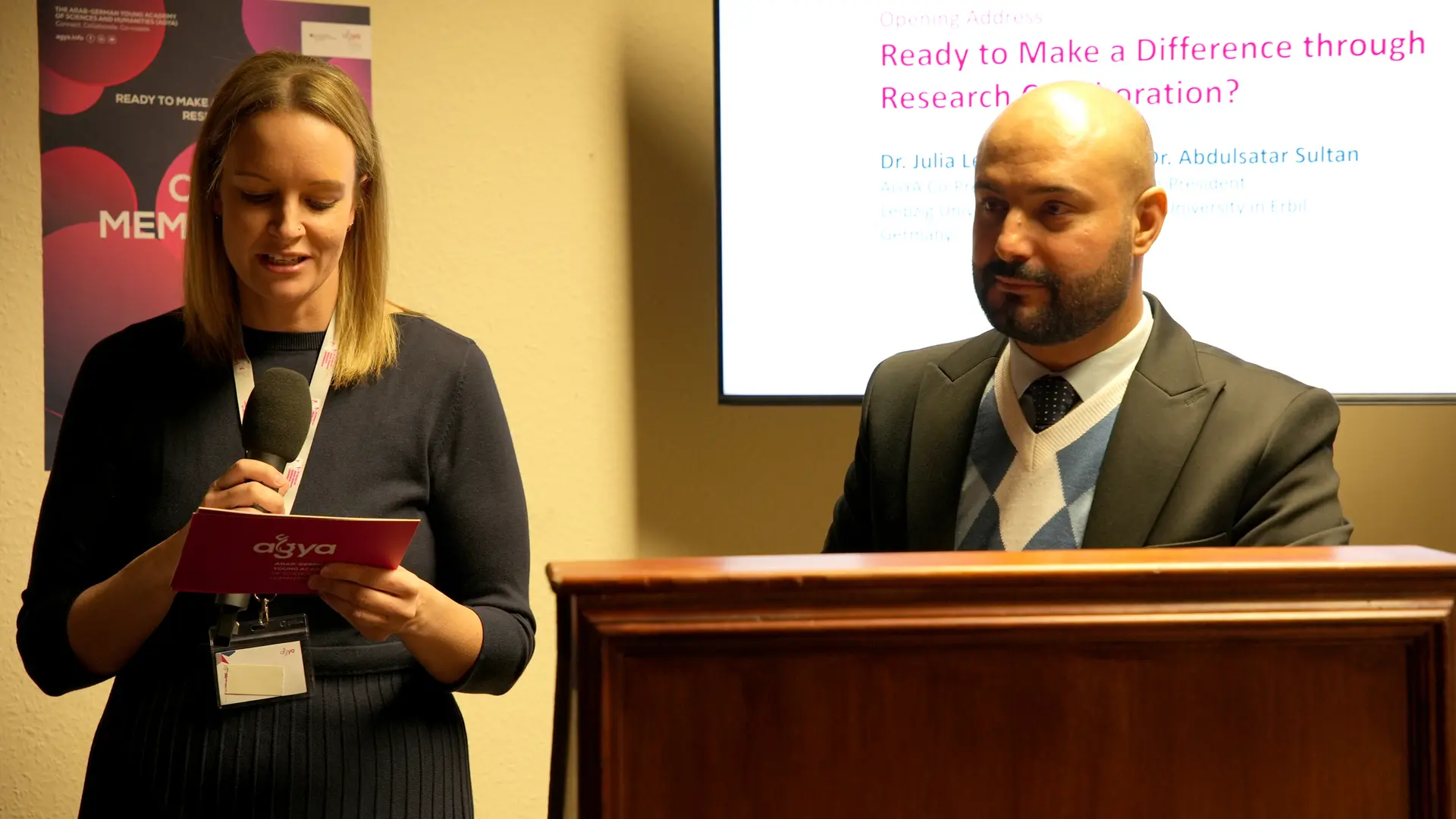
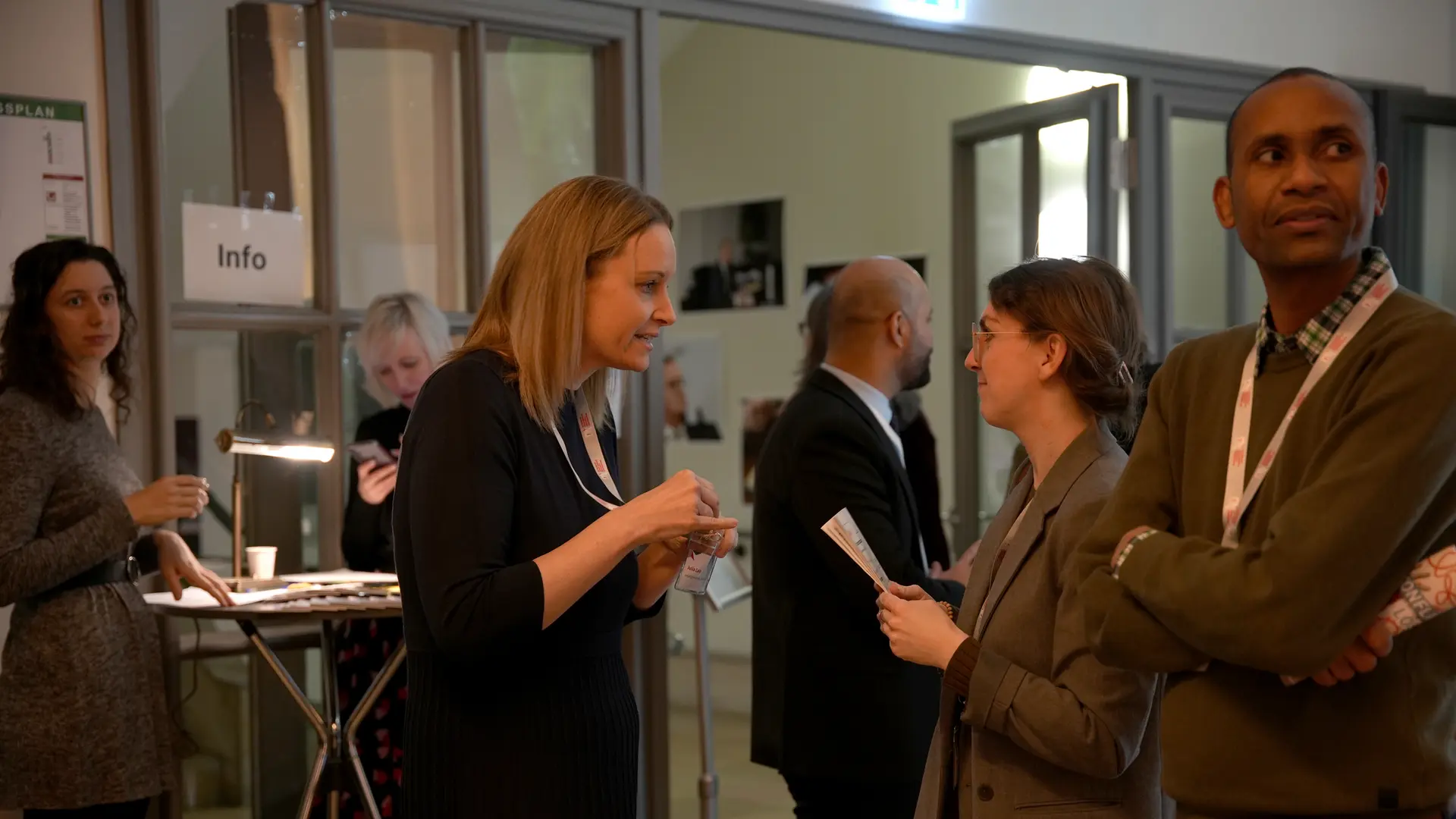
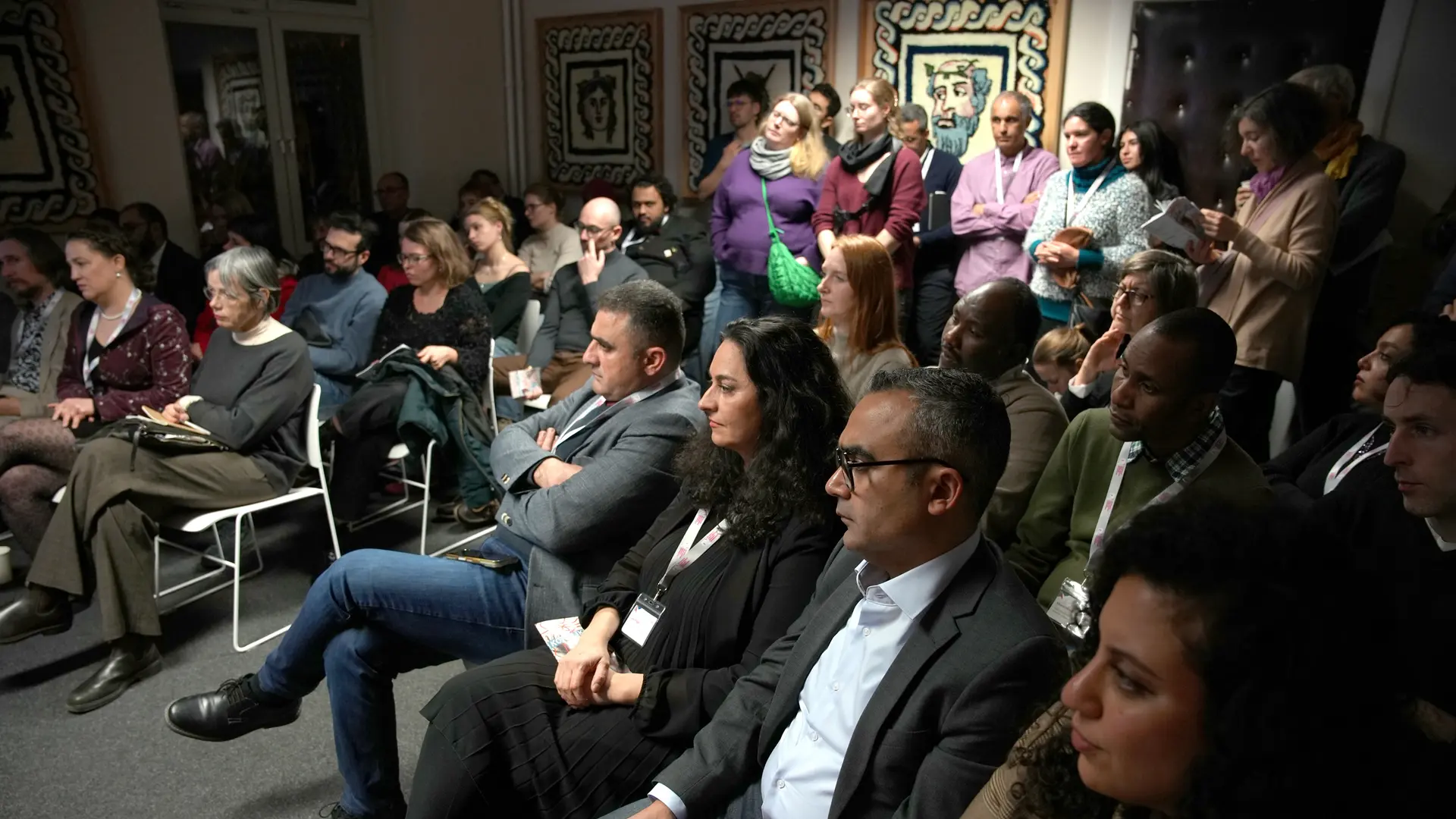
AGYA at the Salon Sophie Charlotte 2026
What does it mean to speak about conflict today? At a time marked by climate crisis, political polarization, and growing distrust in institutions, conflict is no longer an abstract concept – it shapes everyday realities across regions. One of the first major scientific events in Berlin's yearly calendar, the Salon Sophie Charlotte saw AGYA respond to this challenge by creating spaces for dialogue, reflection, and exchange, demonstrating how Arab-German research cooperation can contribute to building common ground.
The Salon Sophie Charlotte creates a space where complex questions can be discussed openly and critically. Especially in polarized times, these kinds of exchanges are more important than ever.
Julia Leib, AGYA Co-President
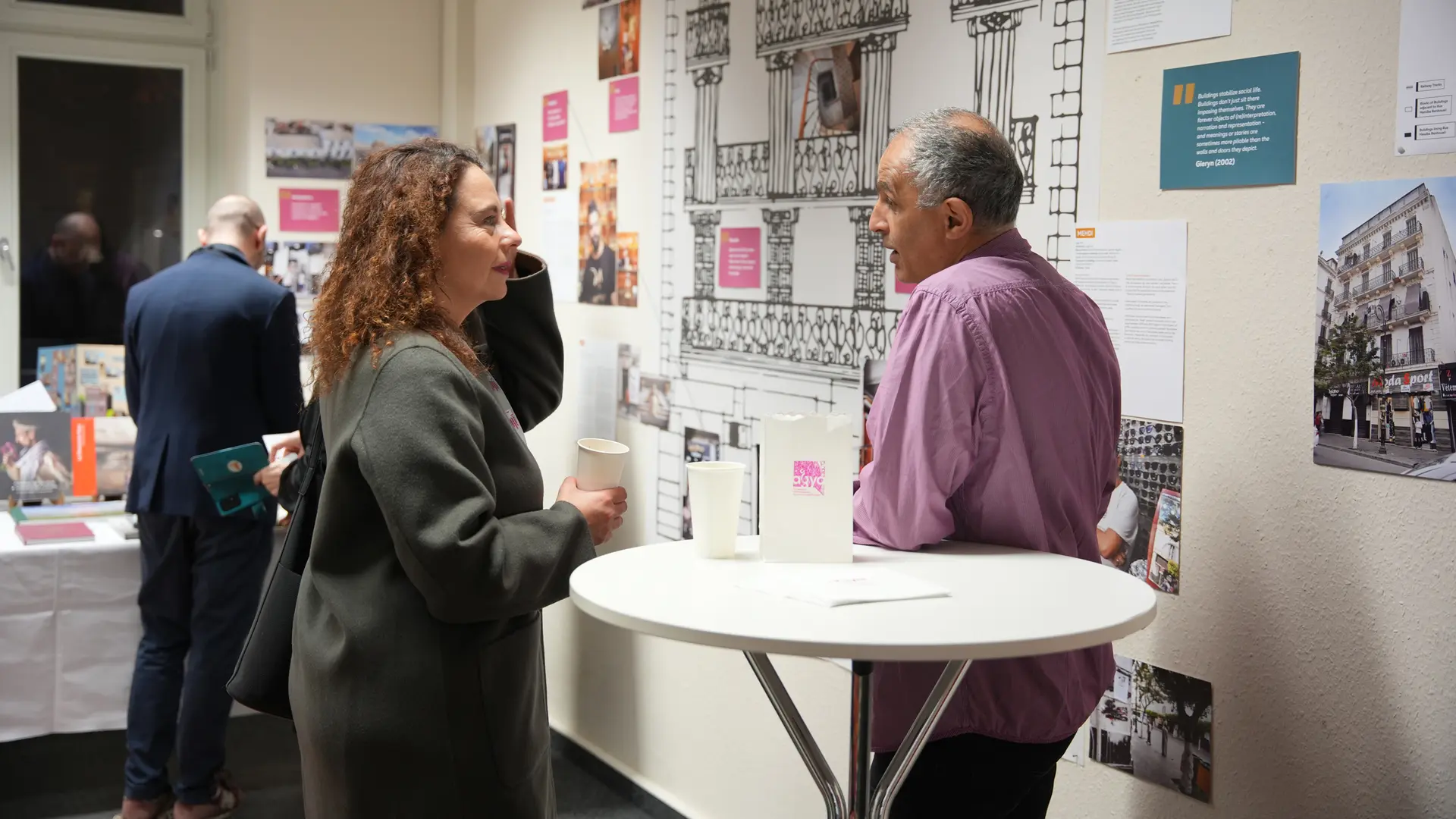
Mediterranean Cities: Urban Stories of Conflict and Conviviality
With the photo exhibition Urban Stories of Conflict and Conviviality, guests had the opportunity to explore questions of migration, inequality, displacement, and collective memory through photography and dialogue. Conceptualised by AGYA member Dr. Claire Bullen and photographer and curator Abed Abidat (Marseille) in collaboration with AGYA alumnae Prof. Dr. Tamirace Fakhoury and Prof. Dr. Lilia Makhloufi, the exhibition explored the Mediterranean cities of Algiers in Algeria, and Marseille in France, as places shaped by both conflict and coexistence — highlighting everyday resilience and evolving forms of belonging.
The exhibition came as a result of the AGYA project Comparing Conflict and Conviviality around the Mediterranean, drawing on an interdisciplinary and collaborative exploration of anthropology, political science, sociology, visual research methods, and migration studies. Rather than romanticising cosmopolitan pasts, it focused on future-oriented imaginaries grounded in shared vulnerabilities: from climate change and housing precarity to economic uncertainty.
What increasingly connects communities today are not shared origins, but shared vulnerabilities. This shift opens new possibilities for solidarity and more inclusive forms of belonging.
Claire Bullen, AGYA Member, University of Tübingen, Germany
AGYA Science Café – Common Grounds
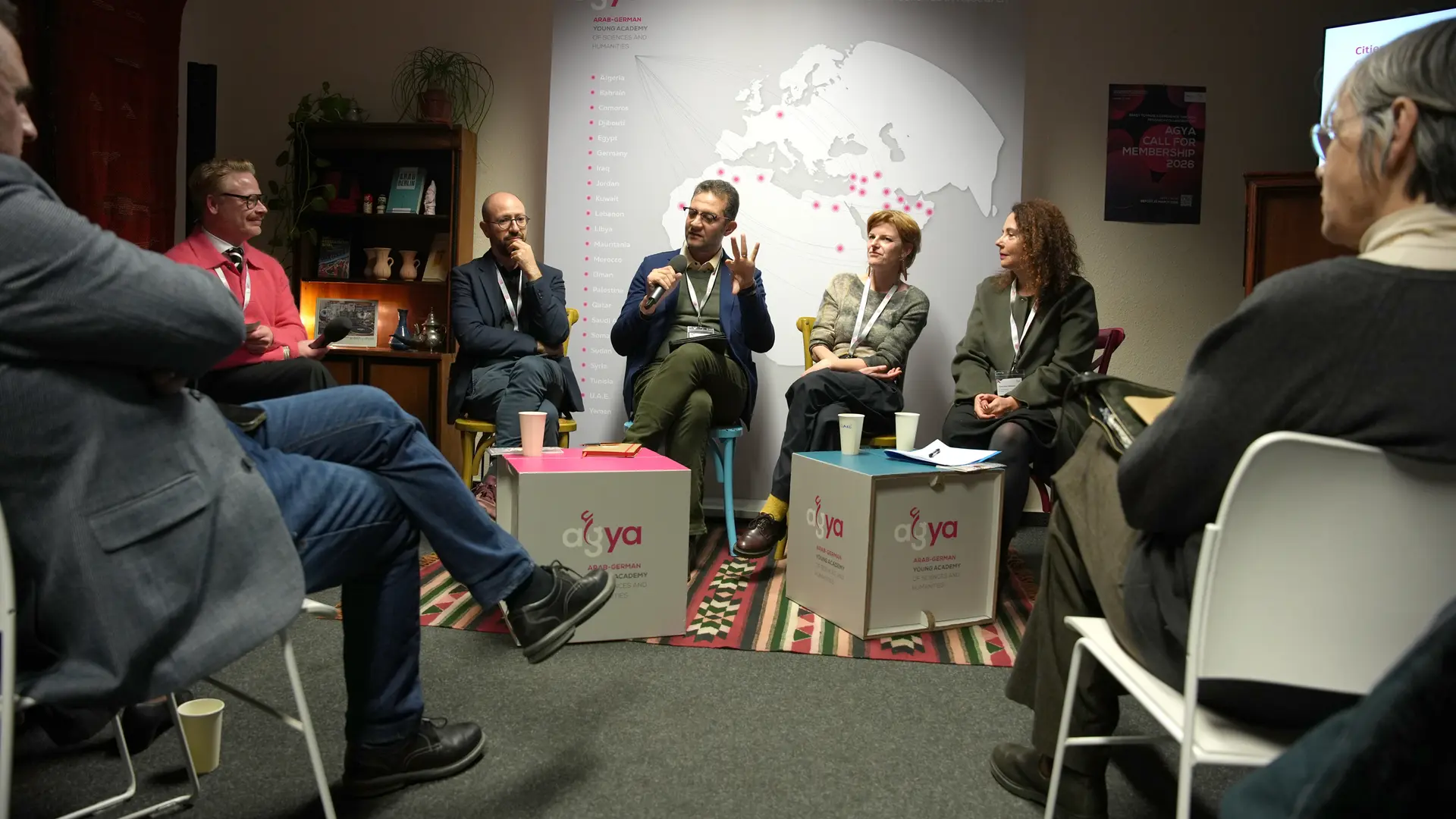
Few things bring people together as effortlessly as a cup of coffee and something sweet to share. The AGYA Science Café drew on this simple yet powerful ritual: over Arabic coffee and dates, guests engaged with AGYA members and alumni/ae from across disciplines in conversations on science diplomacy and conflict resolution.
Research in Times of Crisis: From Food Security to Disputed Scholarship
At two moments during the evening, the focus turned to in-depth panel discussions addressing pressing global challenges from interdisciplinary and cross-regional perspectives.
Food Crisis: Sowing Solutions for Food Security and Healthy Nutrition
How can global food systems remain resilient as climate change reshapes agricultural realities? Moderated by Dr. Constanze Bickelmann, AGYA alumnus Prof. Dr. Tilal Abdelhalim, AGYA alumna Dr. Henda Mahmoudi, and Prof. Dr. Hermine Mitter examined this question in their panel.
Drawing on experiences from the Arab world and Europe, the discussion highlighted adaptive strategies at multiple levels – from resilient crop development to institutional frameworks and policy measures. It made clear that food security is not only a technical challenge but a social and political one, requiring sustained cooperation across borders and disciplines.
The Disputed Scientist: Reflections on the Standing and Understanding of Scholars in Society
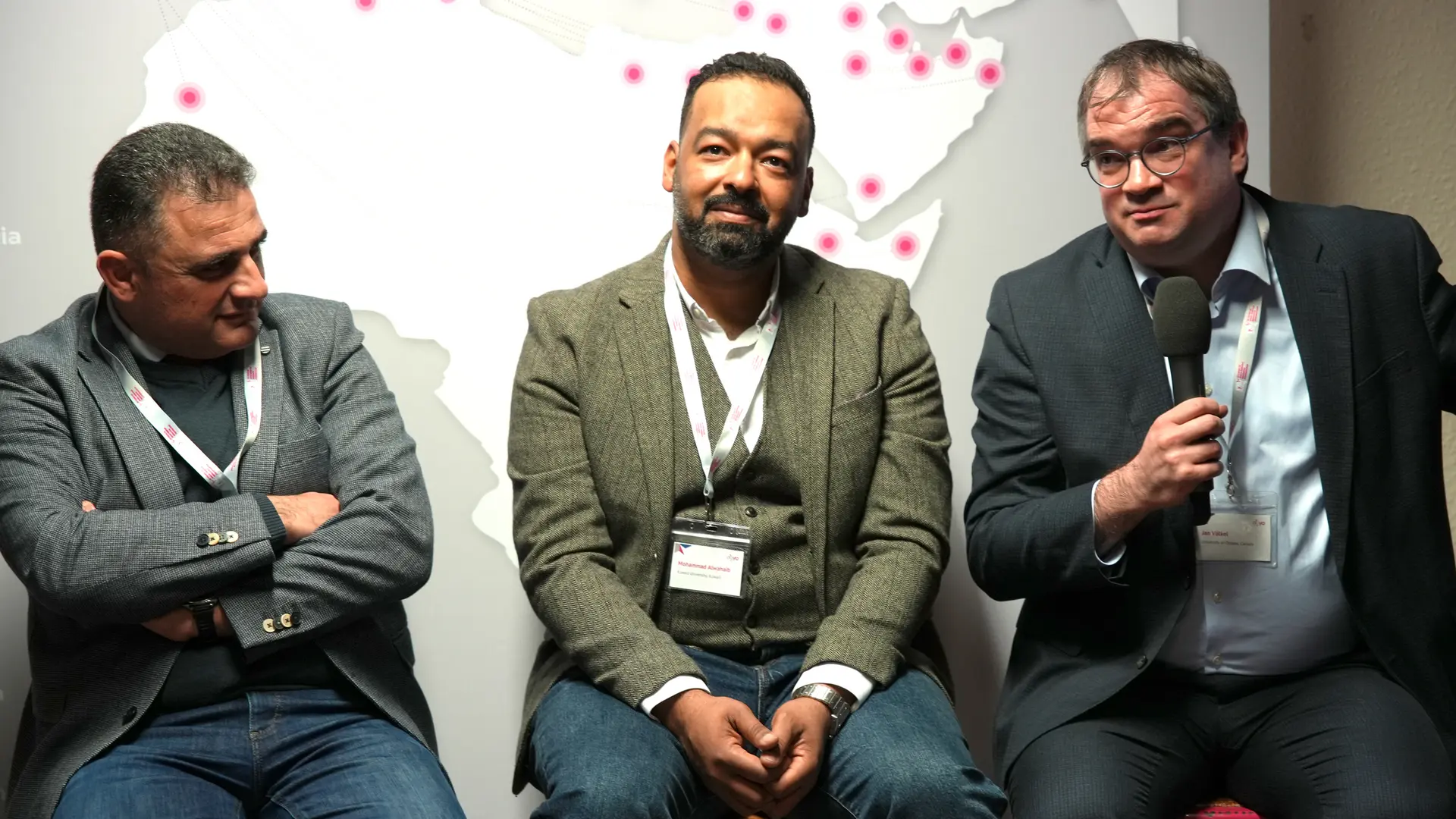
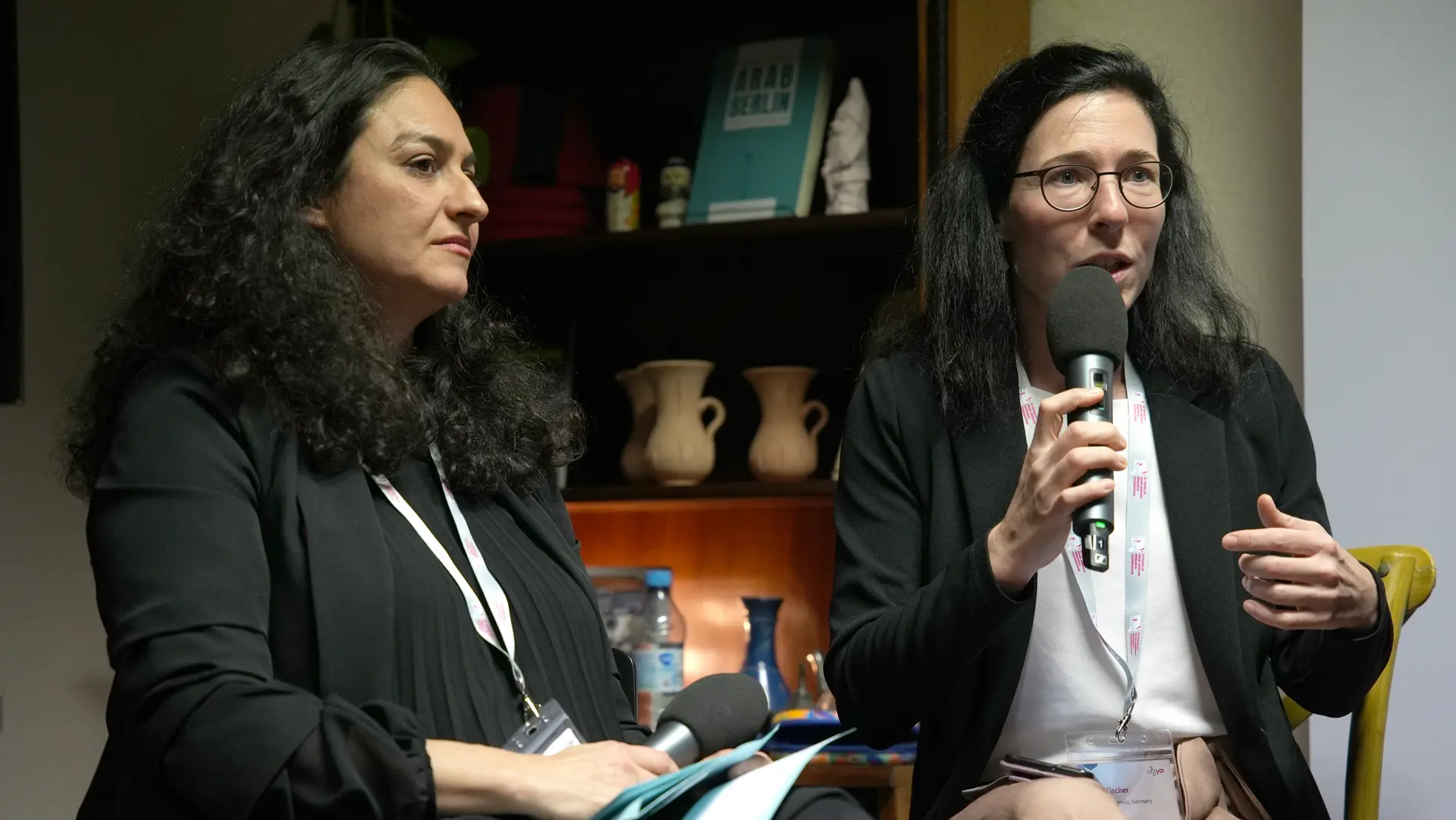
The second panel addressed the evolving role of scholars in times of crisis, limited academic freedom, and rising scepticism toward institutional expertise. Presenting insights from a recent AGYA conference in Tunis, AGYA alumnae Dr. Luise Fischer, Prof. Dr. Jan Völkel, Prof. Dr. Ahmad Amro and Prof. Dr. Mohammad Alwahaib – moderated by Dr. Laila Prager – reflected on what it means to be a researcher in societies where academic freedom is under pressure and public trust in institutions is eroding.
The discussion drew on contrasting realities: in the Arab world, scholars frequently navigate scarce resources, limited platforms for academic expression, and restricted access to international knowledge networks; in Germany, growing external influence on research institutions and a broader ‘post-truth’ climate raise their own questions about scholarly independence.
Scholarship does not exist in a vacuum. Especially in times of crisis, researchers must navigate between critical independence and societal responsibility. Dialogue with society is not optional – it is essential.
Abdulsatar Sultan, AGYA Co-President
The panel ultimately asked how scholars in both regions can contribute meaningfully, not only within academic systems, but in the public sphere overall.
A Dynamic Closing: Conflict Resolved! Rays of Hope from History
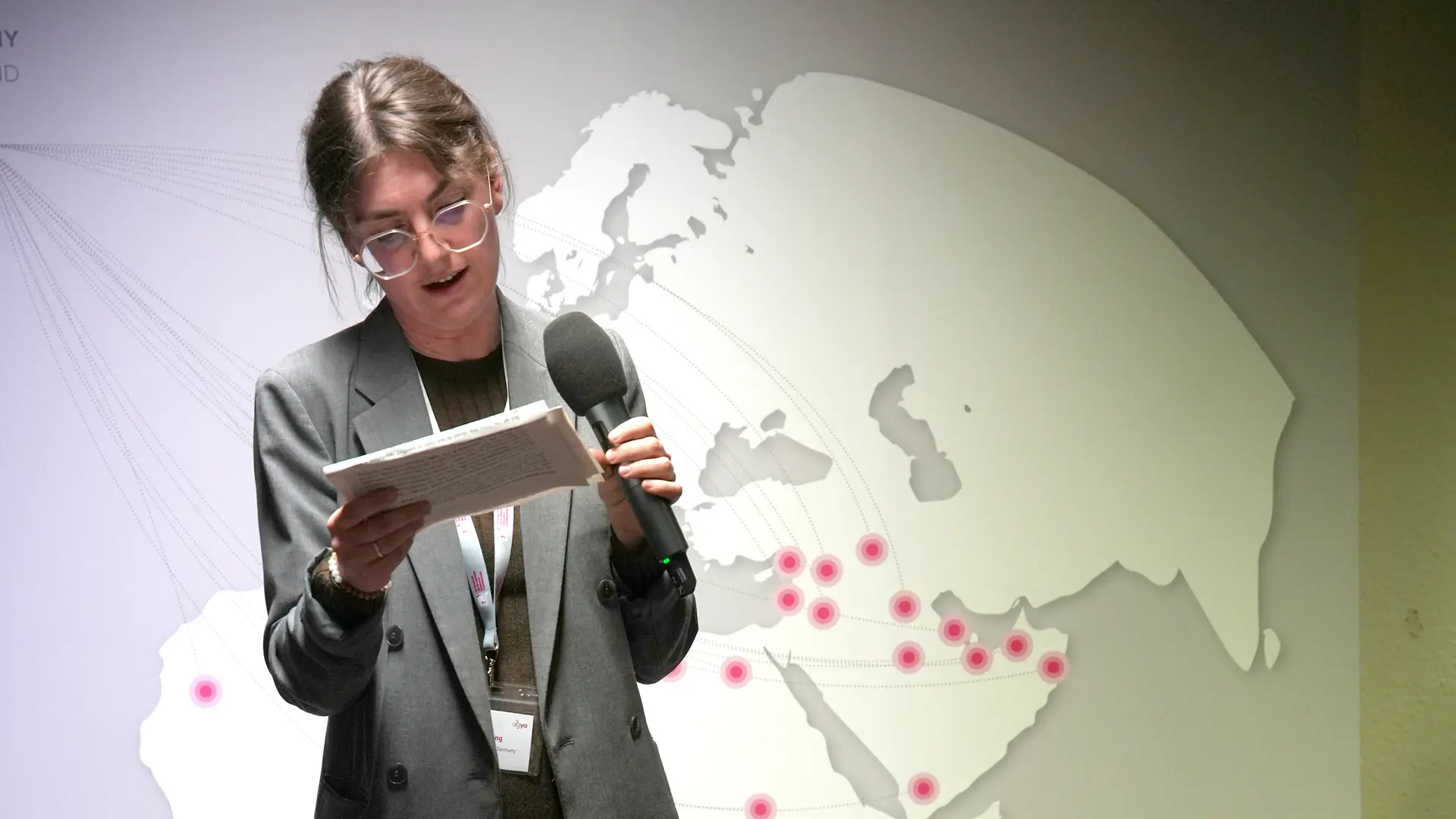
The evening concluded with a series of Soap Box Talks presenting methods of conflict resolution from different historical periods and regions in a vivid and creative format. In concise and engaging interventions, AGYA members and alumnae demonstrated that history offers not only stories of division but also powerful examples of negotiation, mediation, and reconciliation.
- “Everyday Peace”: Micro-practices of Peace Amid Conflict
Hanna Pfeifer, AGYA Alumna, Peace and Conflict Studies, Hamburg - How Bedouins Use Traditions, Gestures, and Poetry to Seek Forgiveness and Resolve Conflicts
Abdulsatar Sultan, AGYA Co-President, Business Management, Erbil - Mato Oput: Healing After Conflict
Julia Leib, AGYA Co-President, Political Science, Leipzig - Bottom-up Solidarity and Conflict Resolution: The Case of Algeria
Faouzia Zeraoulia, AGYA Member, Political Science, Jijel - Managing Resource Conflicts in Arid Environments: Lessons from Prehistoric Arabia
Stefan Smith, AGYA Member, Archaeology, Mainz - In the Oasis: Amazigh Knowledge, Smart Management and Conflict Resolution
Lahcen El-Youssfi, AGYA Member, Agro-Environmental Studies, Kenitra - Jirgas and Faislos: Legal Plurality in Conflict Resolution in Pakistan
Mujtaba Isani, AGYA Member, Sociology, Berlin - Remember how it was complicated? Co-Existing Historical Narratives in Conflict Resolution
Barbara Henning, AGYA Member, History, Hamburg
The talks ranged widely - from prehistoric Arabia to post-conflict Uganda, from Amazigh oasis governance to Pakistani legal pluralism - yet a common thread ran through them: that conflict resolution rarely begins with formal agreements or diplomatic breakthroughs, but with the everyday practices through which communities have long managed tension, restored trust, and made coexistence possible. What united them was a shared conviction that research has a role to play, not just in understanding conflict, but in pointing toward ways through it.
As a well-established annual event in Berlin’s cultural and academic calendar, the Salon Sophie Charlotte provides a valued platform for exchange between researchers and the broader public. With its contribution to the 2026 edition, AGYA once again highlighted the strength of interdisciplinary collaboration and sustained Arab-German research cooperation in this setting. By engaging its members and alumni/ae in dialogue with the Salon’s diverse audience, AGYA both contributed to and drew inspiration from this forum for open discussion. In doing so, it demonstrated how research collaboration and thoughtful exchange can help foster common ground in a fragmented world.
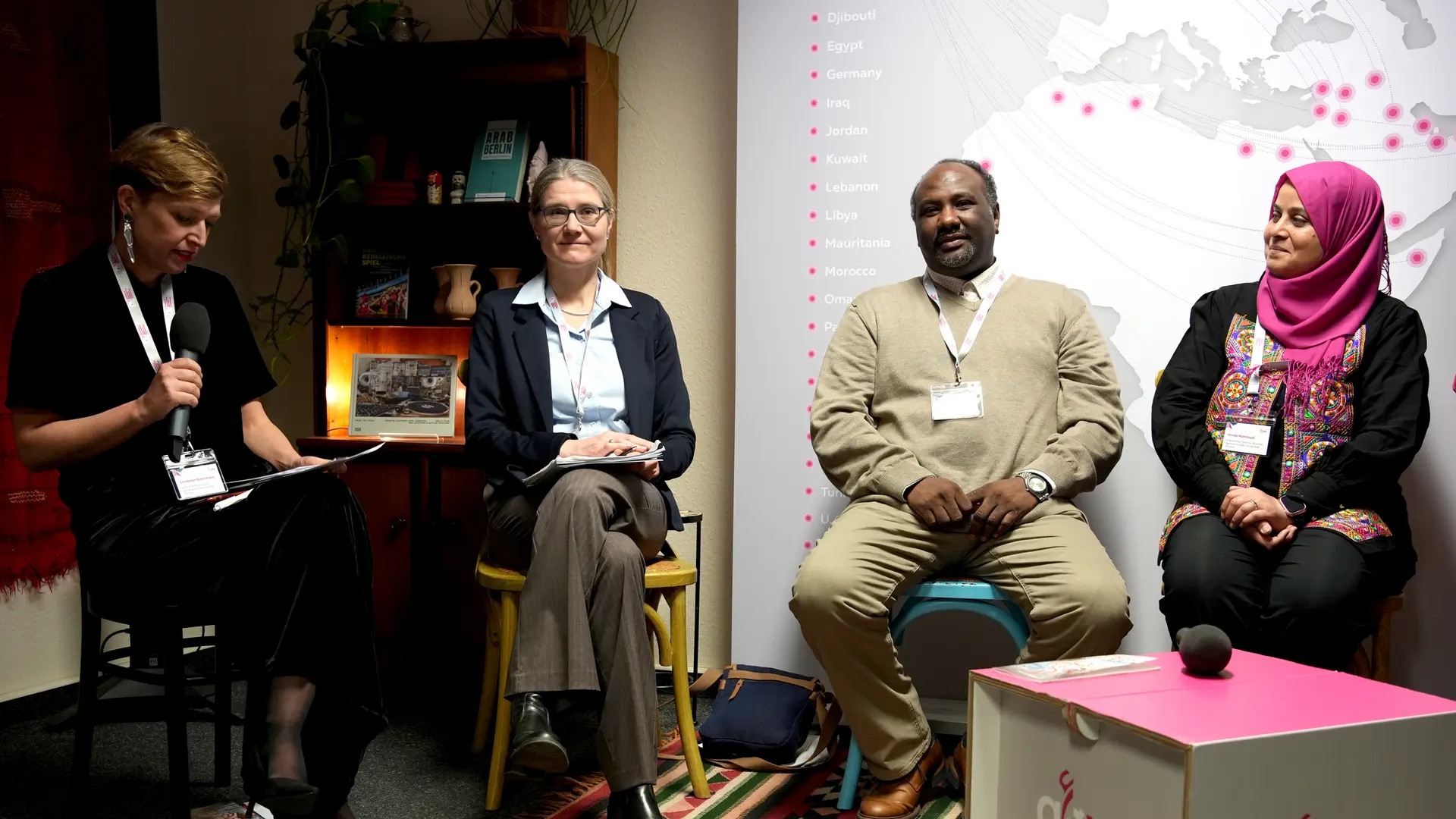

Soap Box Talks
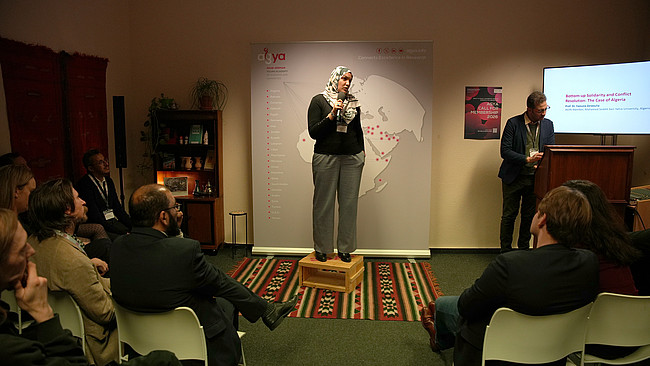
In Algeria, women’s activism has been central both during the conflict and in post‑conflict reconstruction, notably through psychological support programs as well as the documentation and advocacy of victimised groups. This underscores that effective conflict resolution and sustainable peace require placing local knowledge — and in particular local gender perspectives — at the heart of peacebuilding efforts.
Faouzia Zeraoulia, AGYA Member, Mohamed Seddik Ben Yahia University, Algeria
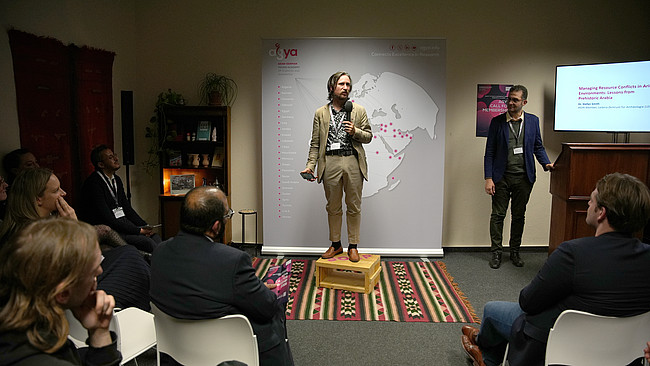
The prehistoric archaeological record from Northern Arabia shows evidence for long-distance trade and exchange, but little evidence for conflict. In the absence of formalised territorial control, resources could not be controlled — only managed. It is a striking example of how, in non-nation-state systems, a lack of formalised control can actually reduce conflict rather than cause it.
Stefan Smith, AGYA Member, Leibniz-Zentrum für Archäologie (LEIZA), Germany
Date and Venue
17 January 2026
Berlin-Brandenburgische Akademie der Wissenschaften