Research Mobility Project
Mapping Urban Knowledge Across the Mediterranean
Field Research
With a sustained interest in how scientific understandings of urban life are shaped by distinct national research cultures and historically embedded asymmetries within global knowledge production, AGYA Member Dr. Claire Bullen undertook a three-month Research Mobility Project involving participant observation and fieldwork with colleagues at the University of Casablanca Hassan II in Morocco.
She was based at the Institute for Research into Anthropological Differentiation and Social Identities (LADSIS), one of the principal hubs of urban ethnography in Morocco. This institutional affiliation enabled her to engage with fellow urban researchers, to participate in teaching and research programmes, and begin to map the key literature and contextual conditions shaping urban research in this North African country. She also co-organised an international workshop on conflict and conviviality in Mediterranean cities, together with AGYA alumna Prof. Dr. Tamirace Fakhoury and colleagues from LADSIS.
Cities are highly complex social objects, and the Mediterranean constitutes a region defined by the convergence of multiple, often competing regimes – socio-political, legal, economic, linguistic, and territorial.
What brought you to Morocco in the framework of your AGYA Research Mobility Project?
Claire Bullen: I have been exploring urban change in the French city of Marseille for many years. From early on, it became clear that analysing Marseille solely through a European lens was insufficient. The urban fabric of Marseille is inherently shaped by deep ties and tensions with the southern Mediterranean shore, forged during France’s colonial expansion in the Maghreb, and perpetuated through post- and neo-colonial relations following independence.
In order to better grasp these trans-Mediterranean connections and conflicts, and their role in shaping life in Marseille, I have engaged extensively with critical urban scholarship and critical Mediterranean studies. This body of literature highlights the extent to which urban theory continues to be filtered through a Euro-American optic: theory developed in Western Europe and North America is routinely deployed to explain urban dynamics elsewhere, including across the Mediterranean, while urban theorisation originating outside the Global North is largely marginalised or simply disregarded. This pattern reflects a confluence of factors, including Eurocentrism, language hierarchies, and resource constraints that limit access to international journals and conferences.
Over the past decade, I have had the opportunity to work alongside a number of urban scholars based south of the Mediterranean, including Prof. Dr. Fadma Ait Mous and Prof. Dr. Sana Benbelli at LADSIS, with whom I have been developing new analytical perspectives on urban dynamics that move beyond ‘northern theorising’. One key insight from this collaboration is that location, along with the differential relations and resources it entails, fundamentally shapes how urban research is conducted.
A further aim was to develop collaborative thinking and advance a major funding application that will enable us to build a comparative, transnational framework for investigating urban dynamics across the Mediterranean.
Urban dynamics across the Mediterranean are your main research interest. What is challenging about your research?
Claire Bullen: Thinking rigorously about urban change across the Mediterranean is therefore an inherently intricate undertaking. It is traversed by profoundly unequal power relations, shaped by factors including nationality, gender, language competencies, professional status, precarity within academic careers, institutional dynamics, and the availability of resources for research. With these constellations varying considerably across different contexts, such factors, along with many others, structure both the questions that research addresses and the ways in which those questions can be investigated. In my experience, the most productive approach to navigating this complexity is to foster collaborative, transnational, and interdisciplinary spaces for exchange, and to work towards the mutual pooling of resources. This project allowed me to take meaningful steps in that direction.
During my time in Casablanca, I had the opportunity to co-teach alongside colleagues. Subsequently, upon returning to Tübingen, I was able to invite colleagues from LADSIS, Sana Benbelli and Chaimaa Ait El Kadi, to deliver guest lectures. However, they were unable to obtain visas, which is itself a vivid illustration of how border regimes constrain collaborative possibilities. Their contributions were delivered online. Despite this limitation, these co-teaching experiences served as productive occasions for broadening students’ perspectives on urban inquiry, and we benefited from insights generated across different national academic contexts, exchanges that helped us to reconsider and refine the translatability of our conceptual frameworks.
This Research Mobility Grant offered an invaluable opportunity to visit Morocco and deepen my understanding of how urban knowledge is produced, taught, investigated in the field, and theorised from within the country, and in particular to engage more closely with Moroccan scholarship that remains less visible internationally.
Did you engage in interdisciplinary encounters during your research stay?
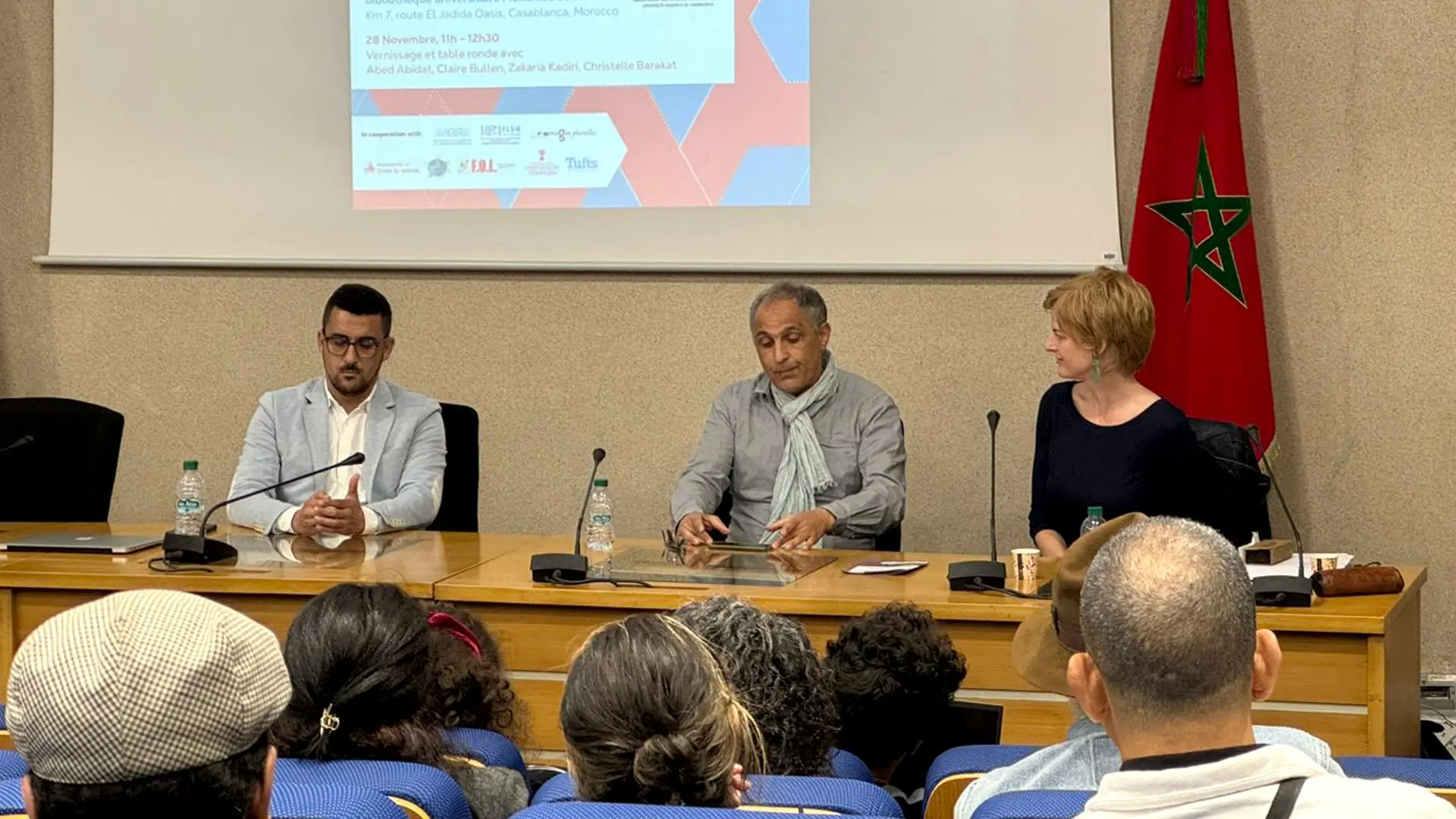
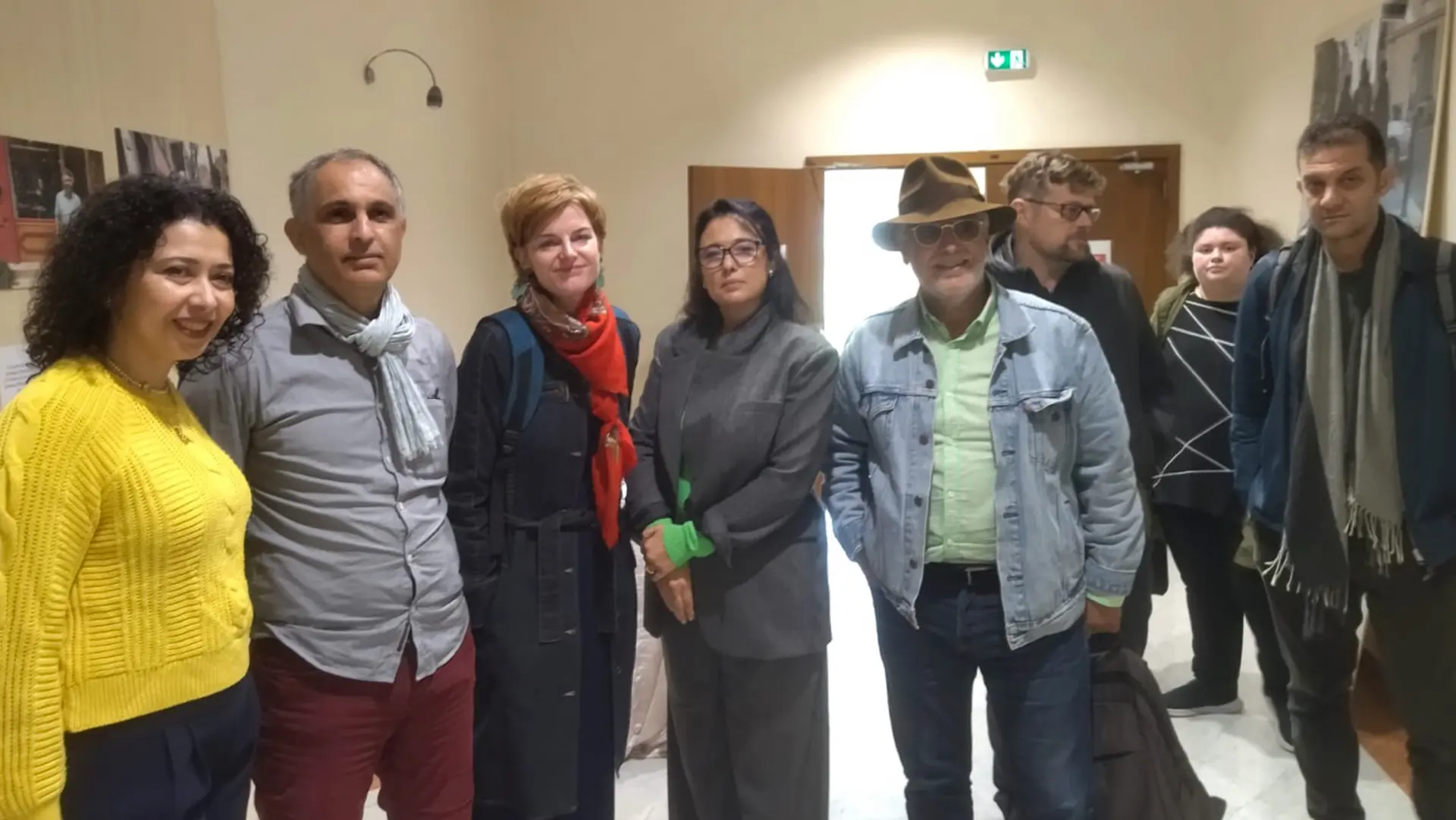
Claire Bullen: Urban research is inherently interdisciplinary, and LADSIS is a research laboratory that brings together anthropological and sociological approaches to the study of social life. The most explicitly interdisciplinary moment of the stay was a two-day workshop co-organised with my colleague, Tamirace Fakhoury, entitled Urban Conflict and Conviviality around the Mediterranean: Exploring Entanglements, Encounters and Transformations around a Contested Sea, and supported by AGYA alumnus Dr. Amro Ali.This event brought together migration scholars, political scientists, cultural theorists, anthropologists, sociologists, and scholars of peace and conflict studies.
The first day concluded with a public screening of the Tunisian film A Summer in La Goulette, accompanied by an online discussion with the director and AGYA alumnus Prof. Dr. Anis Ben Amor in the presence of French photographer Abed Abidat. These events fed into a round table discussion on the use of visual methodologies to better capture the complexity of urban life.
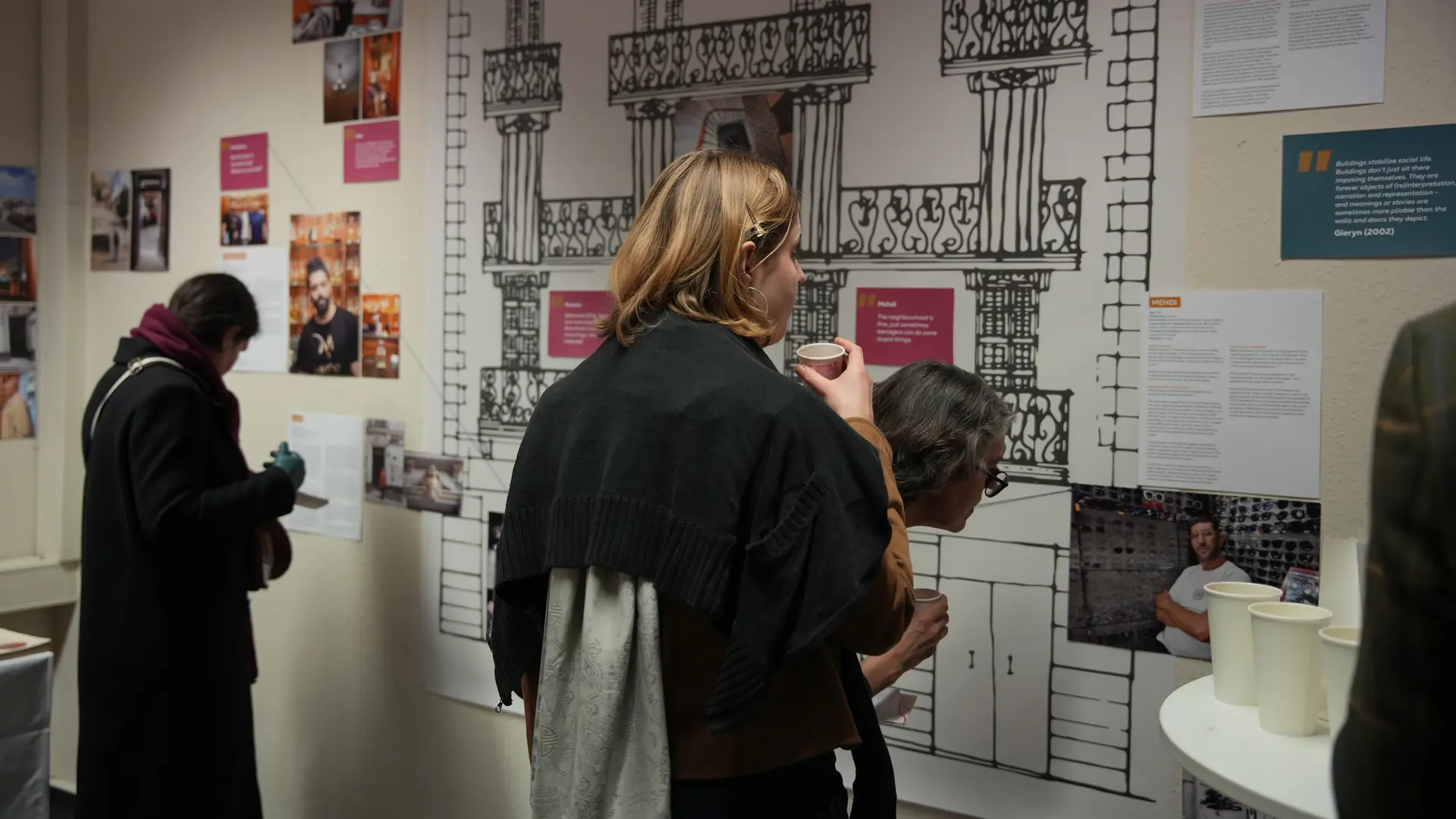
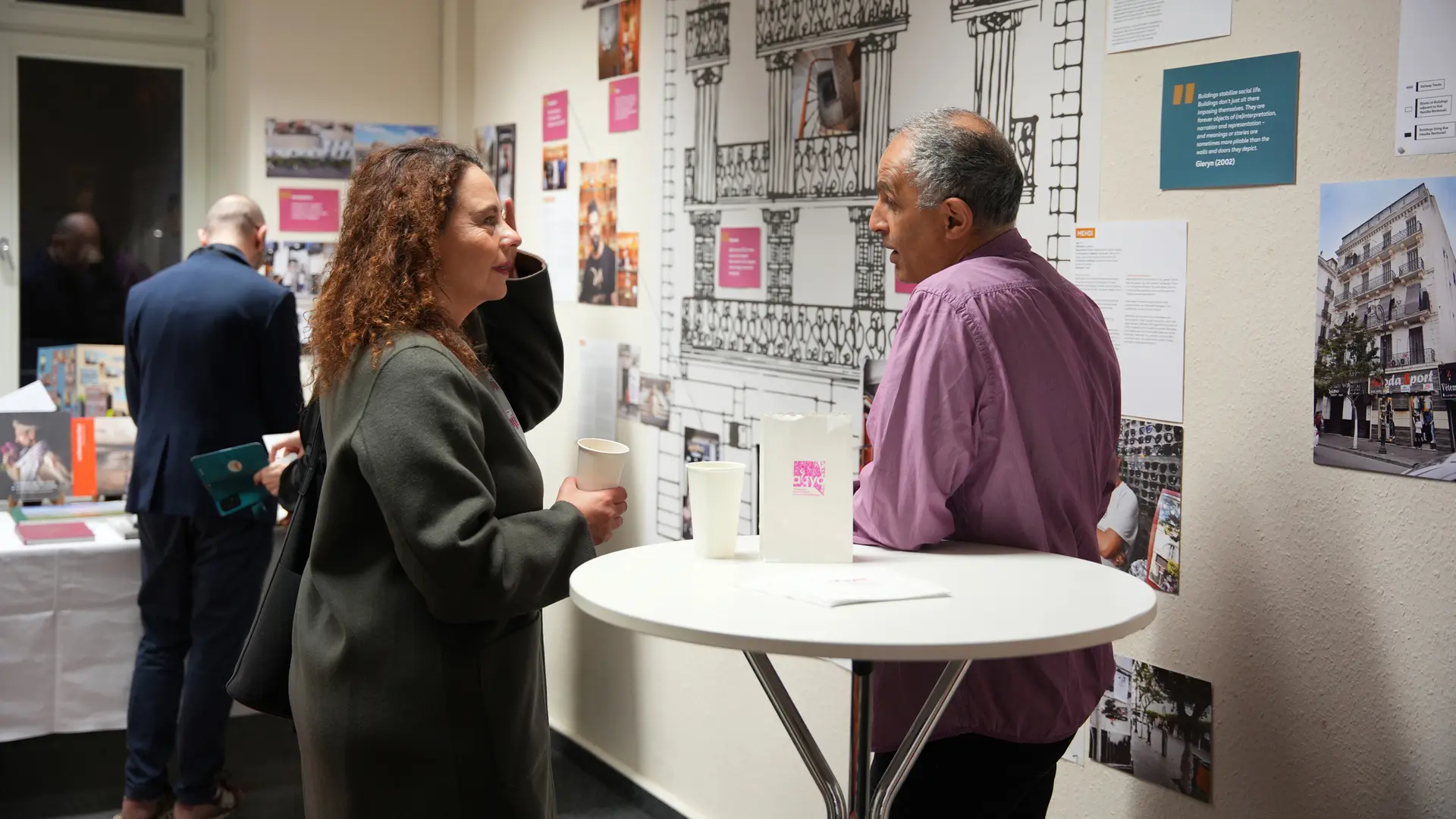
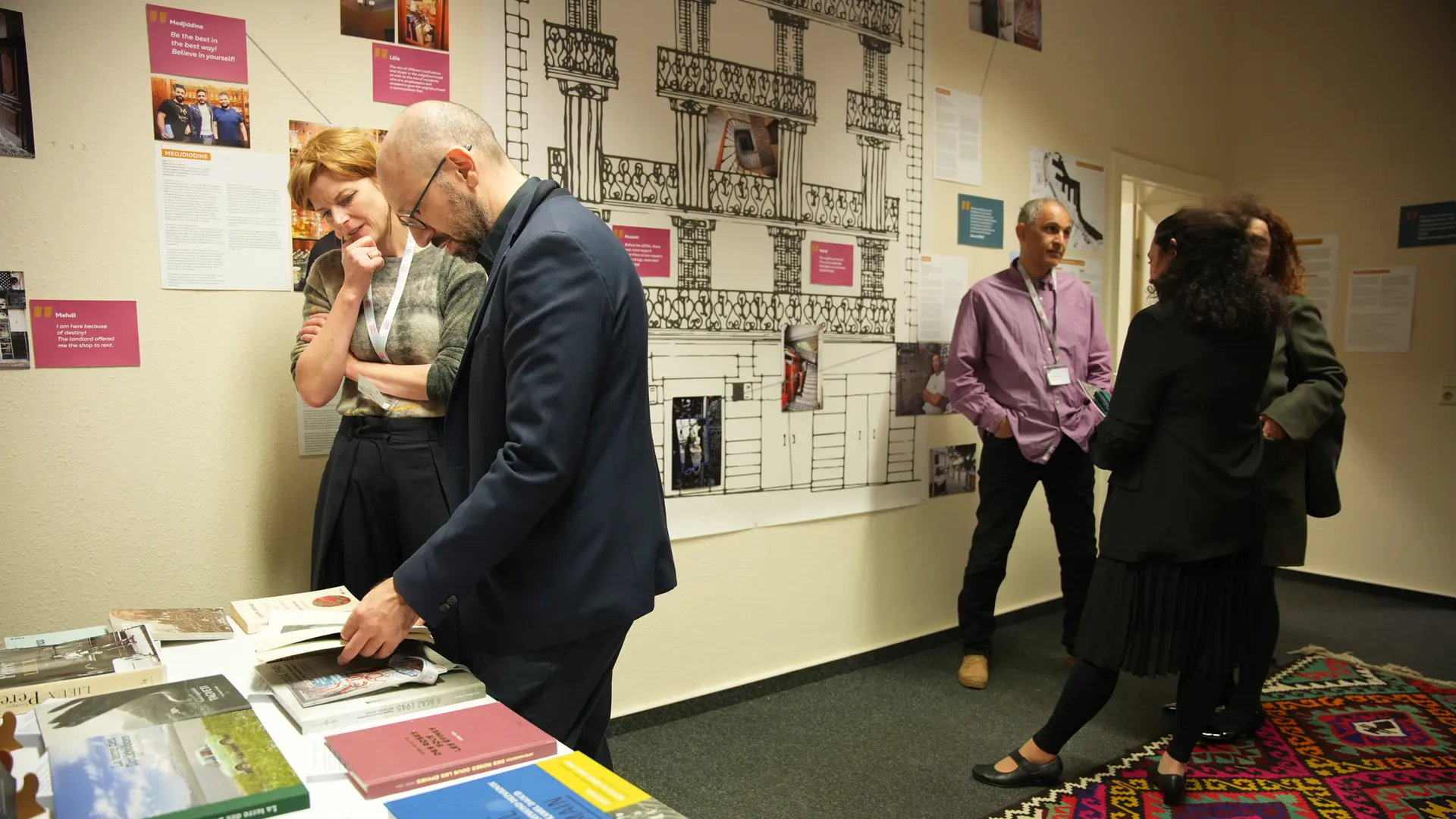
One tangible outcome of this collaborative work was the photo exhibition „Urban Stories of Conflict and Conviviality", conceptualised together with photographer Abed Abidat and AGYA alumna Tamirace Fakhoury, alongside AGYA alumna Prof. Dr. Lilia Makhloufi. The exhibition was presented in January 2026 as a two-room installation during the Salon Sophie Charlotte at the Berlin-Brandenburgische Akademie der Wissenschaften (BBAW). It explored the Mediterranean cities of Algiers and Marseille as places shaped by both conflict and coexistence, inviting visitors to engage with questions of migration, inequality, displacement, and collective memory through photography and dialogue.
The following day featured the opening of a photographic and sociological exhibition in the presence of French photographer Abed Abidat. These events fed into a round table discussion on the use of visual methodologies to better capture the complexity of urban life.

- Disciplines Involved
- Sociology, Anthropology, Political Sciences
- Hosting Institution
- Institute for Research into Anthropological Differentiation and Social Identities (LADSIS)
- Duration
- 3 months
- Year
- 2025
- Funding Scheme
- Research Mobility Project
- Countries Involved
- Morocco, Germany