Research Mobility Project
Tracing the Theoretical Turn in Arabic Studies
Archival Research
How can private correspondence between two scholars reshape our understanding of an entire academic discipline? AGYA alumnus Dr. Kirill Dmitriev is exploring this question through a unique archival project at Freie Universität Berlin. By analysing more than four decades of correspondence between the renowned Arabists Renate Jacobi and Wolfhart Heinrichs, his project uncovers how literary theory transformed the study of classical Arabic literature – and how these intellectual debates continue to shape scholarship today.
What is your research project about?
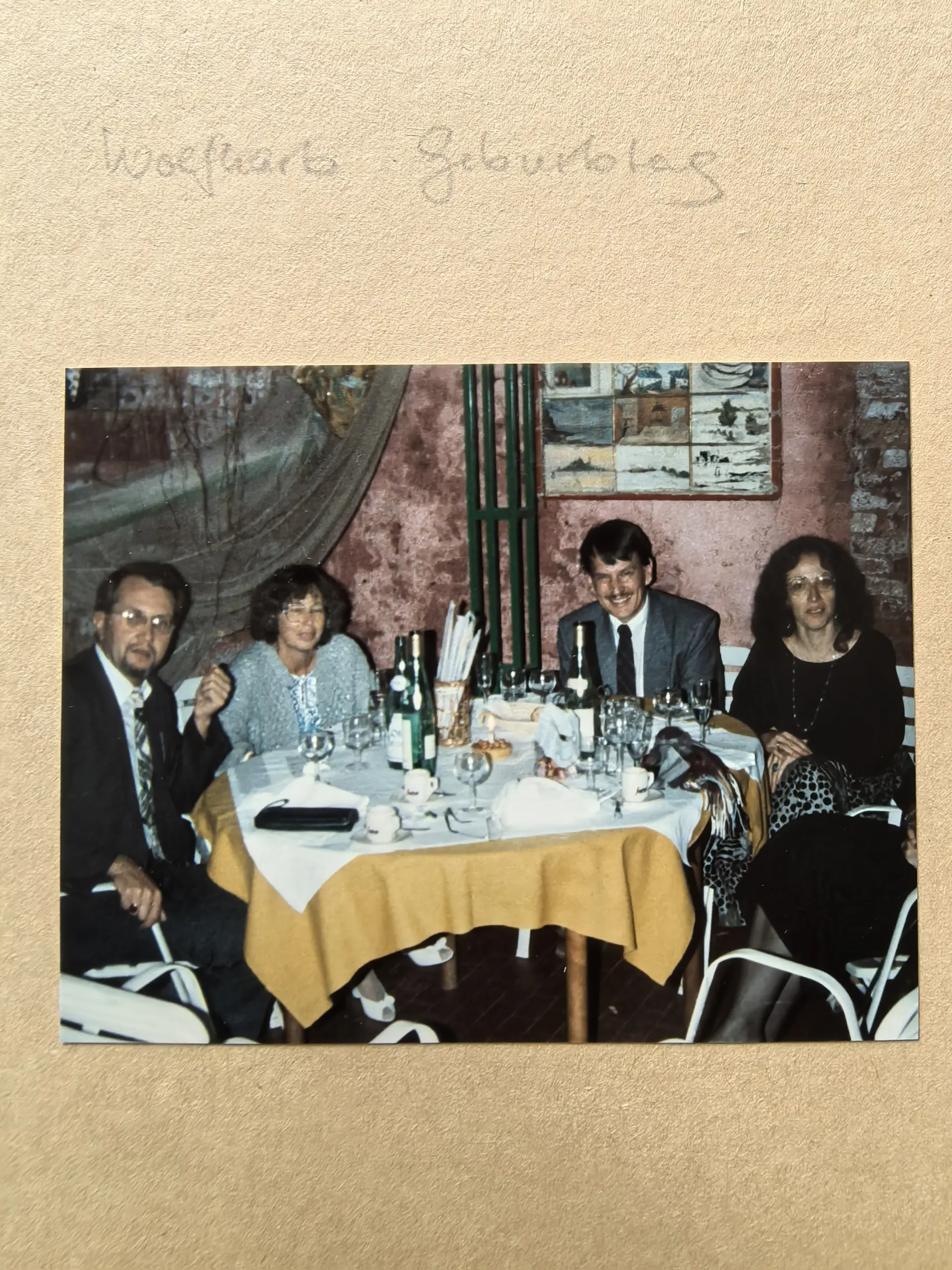
My project investigates the academic correspondence between Renate Jacobi and Wolfhart Heinrichs, two of the most influential German scholars of classical Arabic literature. Their letters span more than forty years, from 1972 until shortly before Heinrichs' death in 2014, documenting not only a long-standing scholarly collaboration but also the development of ideas that fundamentally changed Arabic studies. The correspondence is preserved in the Renate Jacobi Archive at Freie Universität Berlin. By studying and annotating these letters, I hope to make this remarkable intellectual dialogue accessible to researchers and to anyone interested in the history of the humanities.
What makes this archive such a valuable resource?
From the 1970s onwards, Arabic studies underwent a significant transformation. Instead of approaching classical Arabic literature solely through philology, scholars increasingly engaged with literary theory and broader debates in the humanities. Renate Jacobi and Wolfhart Heinrichs were among the key figures driving this development. Although their published works are widely known, their correspondence offers a rare opportunity to understand how their ideas emerged, evolved, and responded to intellectual challenges over several decades. The letters reveal discussions about methodology, literary interpretation, and theoretical concepts that often remain invisible in published research.
What new insights does your project help to uncover?
While previous studies have examined the scholarly contributions of Jacobi and Heinrichs, little attention has been paid to the intellectual processes behind their work. Their correspondence allows us to reconstruct these processes and better understand how major theoretical approaches developed. The project also highlights the international dimensions of Arabic studies. It demonstrates how scholarly debates in Germany interacted with wider discussions in literary and cultural studies and how these exchanges have influenced research in both Europe and the Arab world.
‘Scholarly ideas rarely emerge in isolation – they develop through dialogue. This correspondence allows us to witness that intellectual process as it unfolded over four decades.’
How do you work with these archival sources?
The archive contains approximately 300 pages of typewritten correspondence. During my research stay at Freie Universität Berlin, I carefully analyse, annotate, and contextualise these documents. The principal outcome will be a freely accessible online edition of the annotated correspondence, published through the World Arabic Literary Salon. The digital format makes these valuable historical sources available to an international audience, including researchers who do not read German.
Why does this research matter today?
Understanding the history of scholarship helps us understand how academic knowledge is created. The correspondence shows that important theoretical innovations often emerge through long-term dialogue, collaboration, and critical exchange rather than through isolated publications. By documenting these intellectual conversations, the project contributes not only to the history of Arabic studies but also to broader discussions about literary theory, intercultural knowledge production, and the development of the humanities.

- Disciplines involved
- Arabic Literature
- Cooperation Partners
- Freie Universität Berlin, Germany
- Members in Charge
- Kirill Dmitriev
- Project Title
- Tracing the Theoretical Turn in Arabic Studies: Academic Correspondence between Renate Jacobi and Wolfhart Heinrichs (1972–2013)
- Year
- 2026
- Funding Scheme
- Research Mobility Project
- Countries Involved
- Germany, United Kingdom