Tandem Project
Towards Easier Robot Programming for Agile Production
Across Europe and the Arab world, the number of skilled welding professionals is declining. Robotic systems offer a promising solution, but only if the people who understand welding can actually program them. Today, that remains a significant barrier. Traditional programming methods require either deep robotics expertise or time-consuming manual configuration, making them impractical in fast-changing, high-mix production environments where tasks change frequently, and downtime is costly.
Programming through doing
The project develops an intuitive robot programming framework that makes high-quality welding automation accessible to operators without coding experience. Starting from a process-based trajectory planning foundation, the project progressively integrates intelligent vision, advanced path optimization, and demonstration-based learning, ultimately enabling robots to learn complex welding tasks simply by observing a human perform them.
Robots anyone can program
As manufacturing demographics shift in both Germany and the Arab world, the ability to deploy robotic systems without requiring deep programming expertise becomes an economic and industrial necessity. The approach is relevant wherever skilled welding labor is scarce and production demands flexibility, from automotive and shipbuilding to small-scale metal fabrication. By lowering the technical barrier to robotic welding, the project contributes to sustainable industrialization, supports workforce transitions, and opens automation to a far broader range of businesses than current approaches allow.
The ultimate ambition is a framework that is agile, user-friendly, and genuinely generic, one that grows with the needs of modern production rather than constraining them.
Mohamad Bdiwi and Ayham Zaitouny extend their gratitude to the project assistants, Ms. Anusuya Baby Hari Krishnan, Ms. Farah Ahmed Mahmoud Morsi Mahmoud, Mr. Joyanto Halim, Mr. Radwan Sukkari, Ms. Sondos M. Syam, and Mr. Talal Ahmad, who play a crucial role in data collection, developing conceptual system architectures, providing experimental assessments, and performing simulations.
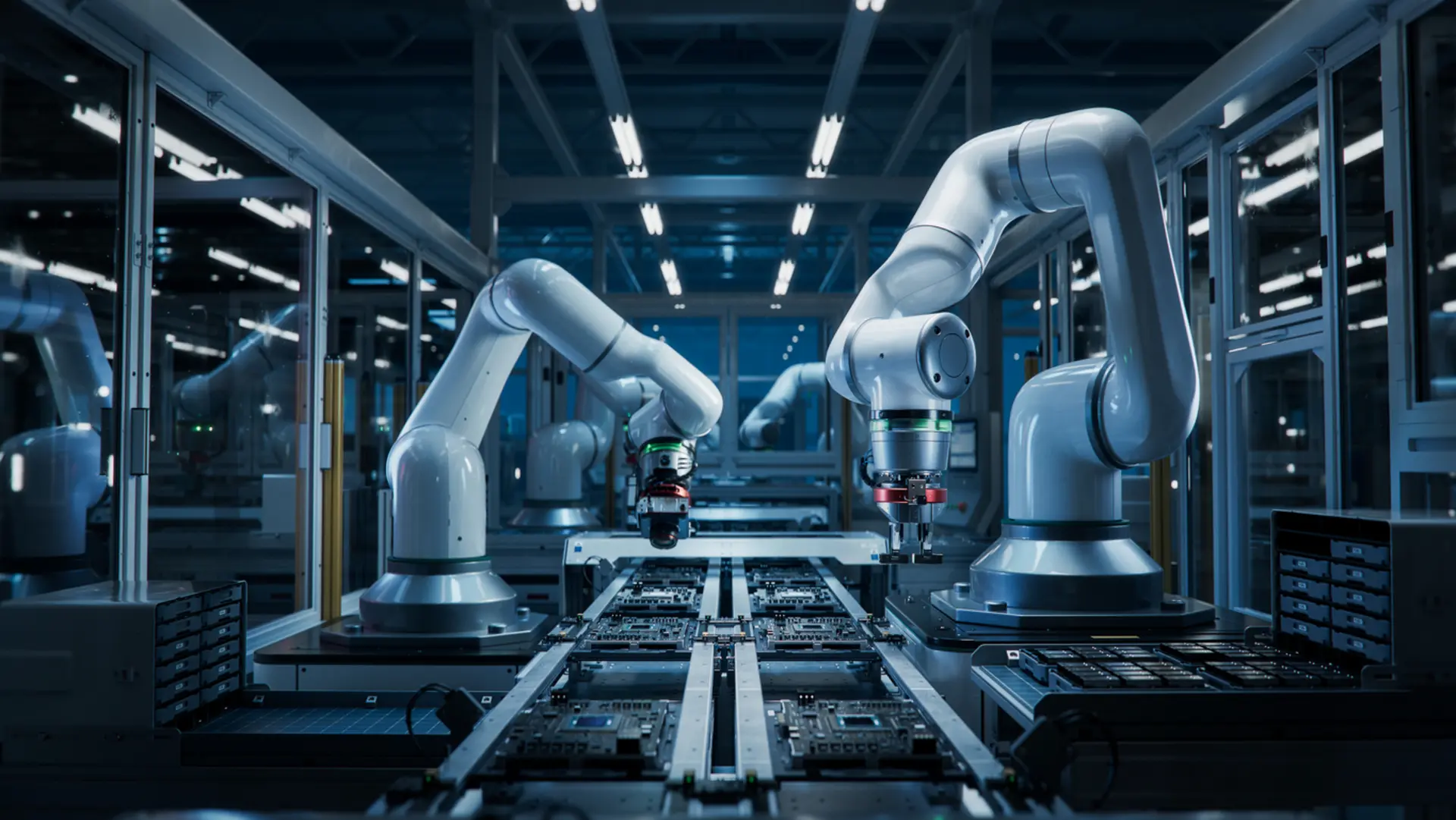
iStock/SweetBunFactory
- Disciplines Involved
- Robotics, Mathematics, Machine Learning
- Cooperation Partners
- Fraunhofer Institute for Machine Tools & Forming Technology IWU, Chemnitz, Germany
- Project Title
- ARTIST II– Advanced Autonomous Robotic Technology for Integrated Skilled Tasks, Part II
- Year
- 2025 - 2026
- Funding Scheme
- Tandem Project
- Countries Involved
- Germany, United Arab Emirates