Alumni Project
Healing Wounds Smarter with Nanofibers
Laboratory Study & Publication
Skin regeneration after injury or disease remains one of the significant challenges in modern medicine. Patients suffering from deep burns, chronic wounds, or conditions such as diabetic ulcers often face prolonged recovery times, scarring, and lasting impacts on their physical and emotional well-being. Conventional wound dressings, from simple bandages to topical formulations, frequently fail to restore the skin's full functionality, as they cannot adequately mimic the body's natural extracellular matrix, support cell growth, or deliver therapeutic molecules in a controlled manner.
This challenge is particularly pressing in two contexts: in the Arab World, where diabetes-related wounds are highly prevalent, and in Germany, where an aging population is driving a growing incidence of chronic wounds. Delayed wound healing therefore represents both a significant health burden and an economic challenge for healthcare systems in both regions.
A nanotechnology-based approach to wound healing
This project aims to develop a new generation of wound dressings based on electrospun nanofibers. They are ultra-fine fiber structures fabricated at the nanoscale, loaded with natural bioactive molecules. The molecules are selected for their ability to promote collagen production, stimulate the formation of new blood vessels (angiogenesis), and accelerate tissue regeneration overall.
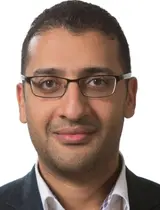
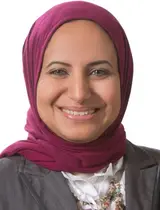
The project is rooted in a genuinely interdisciplinary collaboration spanning pharmaceutics, material science, and regenerative medicine. AGYA alumna Prof. Dr. Maha Nasr, brings her expertise in pharmaceutical formulation and drug delivery to the development of bioactive nanofiber dressings, with a particular focus on solutions relevant to diabetes-related wounds in the Arab World. AGYA alumnus Prof. Dr. Mohamed Abou El-Enein contributes a translational perspective, bridging the gap between laboratory innovation and clinical applicability. Having maintained strong ties to his former home institution, Charité – Universitätsmedizin Berlin, he brings with him established collaborations and access to cutting-edge bioengineering infrastructure that make the institution a natural hub for the project's research activities.
Scientifically, the project generates new insights into how nanofiber scaffolds and natural bioactive molecules interact with human tissue to modulate and accelerate repair processes. Technically and economically, the use of electrospinning, a scalable and cost-effective manufacturing technology, combined with naturally derived compounds enhances the prospects for clinical translation and eventual commercialization of the developed dressings. Socially, the project directly addresses urgent healthcare needs in the Arab countries, by working toward affordable solutions for diabetes-related chronic wounds, and in Germany, by supporting healthy aging and helping to reduce the growing burden of chronic wound care on the healthcare system.
Ultimately, this project strives to move wound care beyond passive protection toward active, biology-driven healing, improving the quality of life for patients and offering a scalable path toward clinical application.
AGYA Alumna Maha Nasr


- Disciplines Involved
- Pharmacy, Nanotechnology, Nanocomposites, Medical & Health Sciences, Clinical research, Regenerative medicine
- Cooperation Partners
- Faculty of Pharmacy, Ain Shams University, Egypt
- Charité - Universitätsmedizin Berlin, Germany
- Project Title
- NanoHeal: Advancing Skin Regeneration and Wound Healing Through Nanofiber-Enhanced Bioactive Scaffolds
- Year
- 2025 - 2026
- Funding Scheme
- Alumni Project
- Countries Involved
- Egypt, Germany, United States of America