Tandem Project
Biosensor Development for Antibiotic Detection
Tandem Project
Antibiotic contamination in water sources poses a growing environmental and public health challenge worldwide. To address this critical issue, AGYA members Dr. Shimaa Eissa and Dr. Walid Elgaher have developed an innovative biosensor capable of detecting antibiotic residues with high sensitivity and selectivity.
To ensure robust performance, the research team employed multiple complementary techniques to assess binding affinity. Fluorescence spectroscopy, microscale thermophoresis, and surface plasmon resonance were utilized alongside electrochemical methods, providing a comprehensive understanding of the aptamer-target interactions, which determine the capability to detect pollution in water samples.
Comprehensive validation and characterization of water pollution
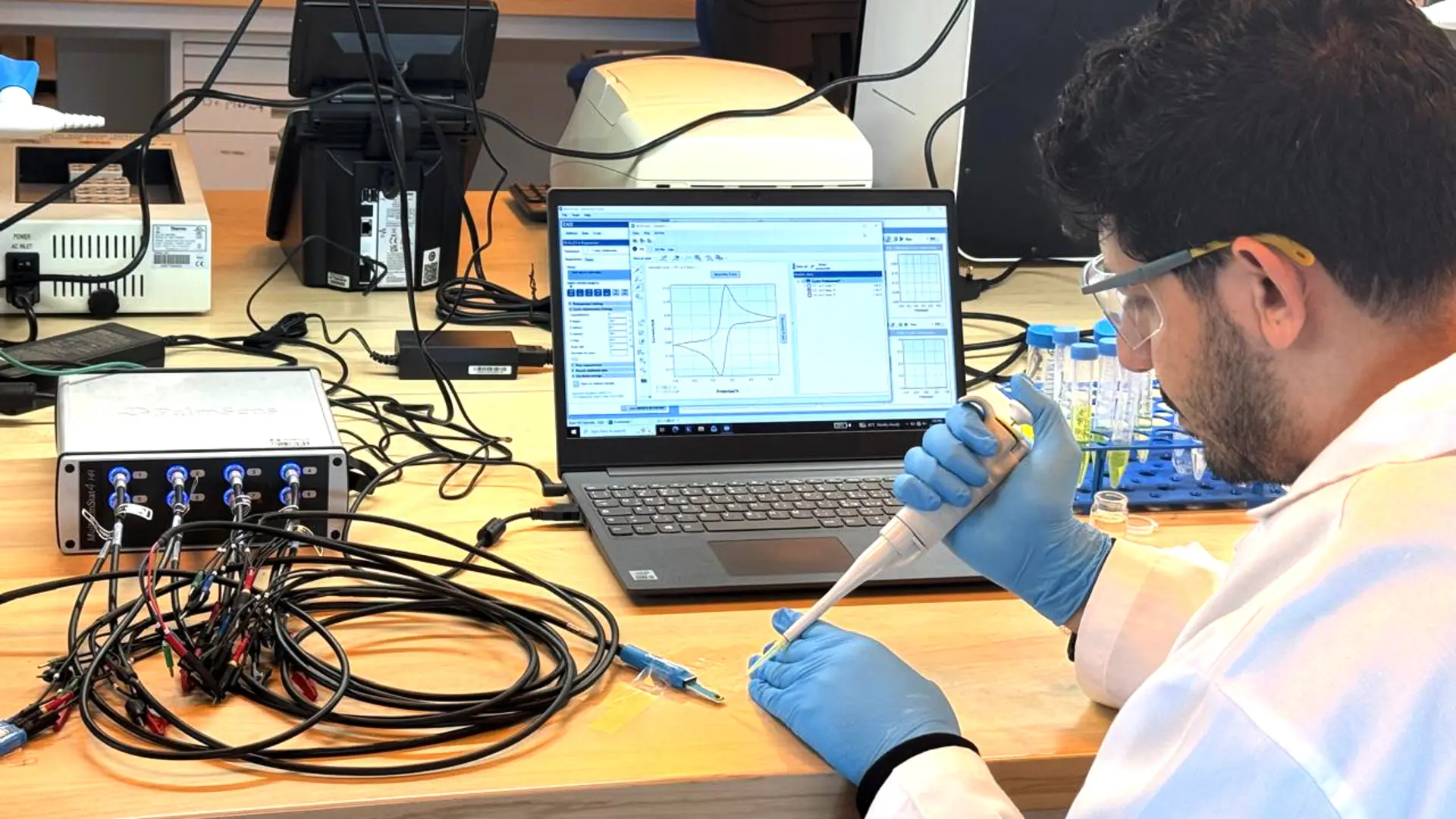
The final biosensor, detecting contaminants in water samples, was fabricated using array screen-printed electrodes modified with reduced graphene oxide, a material known for enhancing electrochemical signal transduction. The platform was characterized using advanced electrochemical techniques, which enabled precise detection of target contaminants at low concentrations.
Selectivity is crucial for real-world applications, where water samples contain complex mixtures of compounds. The biosensor underwent extensive specificity and cross-reactivity testing against structurally similar molecules, confirming its ability to distinguish target antibiotics from related substances.
Implications for environmental monitoring
This work represents a significant advancement in environmental sensing technology. The developed biosensor offers a rapid, sensitive, and cost-effective alternative to traditional analytical methods for monitoring antibiotic contamination in water. Such tools are essential for safeguarding water quality, protecting ecosystems, and helping to prevent the spread of antimicrobial resistance – one of the most pressing global health threats of our time.
Shimaa Eissa
- Disciplines involved
- Bionanotechnology, Pharmacy, Medicinal Chemistry
- Cooperation Partner
- Khalifa University, Abu Dhabi, United Arab Emirates
- Helmholtz Institute for pharmaceutical Research Saarland (HIPS), Saarbrucken, Germany
- Project Title
- New Biosensing Technology for Low-cost Decentral Antibiotics Detection
- Year
- 2025
- Funding Scheme
- Tandem Project
- Countries Involved
- Germany, United Arab Emirates