Tandem Project
Beyond Eurocentrism and Arabocentrism
International Workshop
Over 35 distinguished scholars from around the world gathered for an interdisciplinary academic exchange during the AGYA international workshop Beyond Eurocentrism and Arabocentrism: Race, Ethnicity, and Knowledge Production in the Arabo-Islamic 'Golden Age'. The workshop facilitated intensive scholarly dialogue that challenged long-standing assumptions about how knowledge was produced and transmitted in premodern Islamic societies.
Questioning established narratives
The workshop addressed a critical gap in contemporary scholarship: the tendency to view the so-called Islamic Golden Age through either Eurocentric lenses that minimise non-Western contributions, or through Arabocentric frameworks that overlook the multilingual, multiethnic, and multicultural realities of these societies. By bringing together perspectives from literary studies, history, theology, philosophy, linguistics, digital humanities, and the natural sciences, the workshop demonstrated how questioning these established narratives opens up entirely new ways of understanding the past and its relevance to contemporary debates.
Bridging generations and disciplines
This workshop was particularly remarkable due to its intergenerational academic exchange. Established scholars whose works have defined their fields sat alongside early-career researchers presenting innovative methodologies and fresh perspectives.
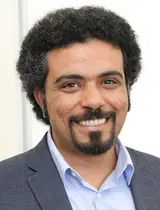
Hany Rashawn, AGYA member
This dynamic created an unusually rich environment for dialogue, where foundational insights met cutting-edge approaches in productive conversation.
The interdisciplinary scope was truly exceptional. Participants explored multilingual poetics in Ottoman, Arabic, and Persian traditions; the development of rhetorical schools along ethnic and geographic lines; the transmission of literature across Jewish, Christian, and Muslim communities; the role of Christian scholars in Arabic cultural production; and Islamic contributions to astronomy, medicine, and the natural sciences. Presentations ranged from close textual analysis of medieval manuscripts to critiques of how artificial intelligence systems process contemporary Arabic dialects, demonstrating how premodern questions continue to resonate in modern contexts.
Rethinking literary and intellectual traditions
Several scholars examined how linguistic diversity shaped literary production in premodern Islamic contexts. AGYA member, Prof. Dr. Hany Rashwan explored multilingualism in Arabo-Islamic worlds, drawing on postcolonial theory to understand how multiple languages coexisted. Dr. Orhan Elmaz from the University of St Andrews, UK traced how Ottoman poets adapted and expanded Arabic and Persian poetic forms. Dr. Shuaib Ally from the University of Tübingen, Germany investigated schools of balāgha (rhetoric) historically developed along ethnic and geographic lines. These pre-modern debates, continue to shape contemporary discussions about Arabic language and literary theory.
The workshop also examined how knowledge travelled across religious communities. Dr. Rachel Scott from Royal Holloway, University of London, UK, presented a comparative reading of Castilian and Hebrew translations of Kalīla wa-Dimna in medieval Iberia. AGYA Alumnus, Prof. Dr. Kirill Dmitriev , traced the journey of Bilawhar wa-Būdhāsaf from ʿAbbāsid Baghdad to early modern Gujarat.
A significant thread running through the workshop was the critique of Eurocentric historiography and its distorting effects on how we understand scientific and intellectual contributions from the Islamic world. Sabreen Syeed from the University of Liverpool, UK demonstrated how dominant narratives structured around constructs like the "Scientific Revolution" systematically marginalise Islamic scientific traditions.
Pedagogy and cultural transmission
The workshop also explored how knowledge was transmitted through less conventional channels. Sebastian Günther from the University of Göttingen, Germany, presented from his forthcoming book on Islamic pedagogy, discussing the 10th-century hadith scholar Ibn al-Sunnī's Riyāḍat al-mutaʿallimīn (The Training of Students), a text recently rediscovered in a Berlin manuscript that outlines 288 educational principles backed by prophetic traditions.
Mahdieh Vali-Zadeh from the University of Toronto, Canada, accompanied by musician Louis Yahya, Canada and France, explored how music functioned in Rumi's Konya as a vehicle for transmitting Sufi mystical knowledge across languages and cultures. Their presentation, which included live musical performances, emphasised the auditory dimension of knowledge transmission
From manuscripts to algorithms
The workshop's temporal scope was equally impressive, extending from antiquity to the present day. Salam Rassi from the University of Edinburgh, UK, discussed editing an Arabic alchemical text attributed to Aristotle, which was likely authored by the 14th-century Church of the East scholar ʿAbdīshōʿ bar Brīkhā, illustrating the complex linguistic practices of Christian communities working within Arabic intellectual traditions.
At the other temporal extreme, Dr. Jakub Zbrzeżny and Ahmad Hroub, from the University of Aberdeen, UK, presented research on how contemporary Large Language Models process colloquial Arabic dialects. Their experiments with ChatGPT and Google Gemini using 10th-century biblical translations rendered in modern Palestinian Khalili dialect raised urgent questions about whether these AI systems threaten linguistic diversity.
Having named a few examples, the discussions were rich and fruitful, with scholars engaging across disciplinary boundaries in ways that illuminated both historical complexities and contemporary stakes.
The feedback from participants highlighted the workshop's success in creating space for genuine interdisciplinary dialogue. Many emphasised the value of connecting with scholars working on related questions from vastly different disciplinary perspectives. From philologists working with medieval manuscripts to computer scientists analysing AI algorithms, from historians of science to literary critics, from theologians to ethnomusicologists.
What struck me most was the genuine interdisciplinary dialogue. As someone working with classical Arabic manuscripts, I found myself in conversation with computer scientists analyzing AI algorithms, historians of science examining astronomical instruments, and ethnomusicologists exploring Sufi traditions.
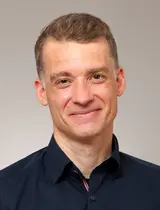
Kirill Dimitriev, AGYA Alumnus
The AGYA international workshop Beyond Eurocentrism and Arabocentrism: Race, Ethnicity, and Knowledge Production in the Arabo-Islamic 'Golden Age' was organised in cooperation with the ERC-SIQILLIYA project (Università degli Studi di Padova) and the University of Aberdeen.


- Disciplines Involved
- Literary Studies, History, Theology, Philosophy, Linguistics, Digital Humanities, Natural Sciences, Musicology, Art History, Science and Technology Studies
- Cooperation Partners
- Università degli Studi di Padova, Italy
- University of Aberdeen, UK
- Event Date
- 11-14 September 2025
- Venue
- University of Aberdeen, Aberdeen, UK
- Project Title
- Beyond Eurocentrism and Arabocentrism: Race, Ethnicity, and Knowledge Production in the Arabo-Islamic 'Golden Age'
- Year
- 2025
- Funding Scheme
- Tandem Project
- Countries Involved
- Germany, France, Canada, Italy, Palestine, Spain, Switzerland, Turkey, United Arab Emirates, United Kingdom, United States of America