Translation and Multilingualism across the Premodern Arabo-Islamic World and Europe
THIS CALL IS CLOSED!
Call for Papers
This international workshop examines multilingualism and translation across the premodern Mediterranean, the Arabo-Islamic world, and Europe as processes of negotiation, transformation, and co-production. Focusing on scholars, translators, and intermediaries working across languages such as Arabic, Latin, Greek, Hebrew, and Persian, it explores how knowledge was shaped and reshaped as it moved between intellectual and institutional contexts.
Aims and Scope
In the premodern Mediterranean and Arabo-Islamic worlds, translation and multilingualism played a central role in shaping intellectual, scientific, literary, legal, and artistic traditions. From the Abbasid translation movement in Baghdad to the vibrant scholarly environments of Al-Andalus, Sicily, and Toledo, knowledge circulated across linguistic, cultural, and religious boundaries through complex processes of translation, adaptation, and reinterpretation.
Arabic functioned as a major scholarly language across vast regions, facilitating the transmission of works from Greek, Persian, and Indian traditions. At the same time, Arabic texts were translated into Latin, Hebrew, and vernacular European languages, contributing to the intellectual developments of medieval and early modern Europe. Works such as those of Abū Bakr al-Rāzī (Rhazes), Ibn Sīnā (Avicenna), and Ibn Rushd (Averroes) became foundational in European medical, philosophical, and scientific traditions. Beyond the sciences, other fields likewise attest to the interaction of languages and cultures, as reflected in notarial handbooks and notarial practices in the Iberian Peninsula and Sicily, where multilingual legal and administrative traditions developed through sustained intercultural exchange.
Rather than viewing these processes as unidirectional “transfers” of knowledge, this workshop seeks to explore translation and multilingualism as dynamic practices of negotiation, transformation, and co-production. It highlights the role of scholars, translators, and intermediaries working across languages such as Arabic, Latin, Greek, Hebrew, Persian, and others, and examines how knowledge was shaped and reshaped as it moved across different intellectual and institutional contexts. Particular attention will also be devoted to the circulation and transformation of literary and poetic practices across linguistic traditions. In multilingual environments such as Norman Sicily, where Arabic, Greek, Latin, Hebrew, and emerging vernacular cultures coexisted in close interaction, courts became crucial spaces for experimentation, adaptation, and literary exchange.
The workshop welcomes contributions examining how poetic forms, courtly aesthetics, themes, motifs, and performative practices moved across languages and traditions, and how vernacular literary cultures, including early Italian lyric, emerged through sustained contact with Arabic and other Mediterranean traditions. Held in Toledo (Spain), long recognised as a key site of translation, the workshop invites contributions that examine the broader networks, practices, and actors involved in multilingual knowledge production across the premodern Arabo-Islamic world(s) and Europe. It will take place in person at UCLM and will include visits to local archives.
Topics of Interest
(including, but not limited to)
- The translation of scientific texts (medicine, astronomy, mathematics, philosophy) between Arabic and Latin traditions
- The reception and transformation of works by scholars such as al-Rāzī, Ibn Sīnā, Ibn Rushd, and others in European contexts
- Multilingual scholarly practices involving Arabic, Latin, Greek, Hebrew, Persian, and vernacular languages
- Translation and adaptation in literary production (poetry, prose, adab, narrative traditions)
- The circulation of poetic forms, motifs, and literary practices across Arabic, Greek, Latin, Hebrew, and vernacular traditions
- Courtly multilingualism and literary production in spaces such as Kalbid, Norman, Swabian Sicily, al-Andalus, and the eastern Mediterranean
- The relationship between Arabic literary culture and the emergence of vernacular lyric traditions in medieval Europe
- The role of Jewish, Christian, and Muslim scholars as intermediaries and translators
- Institutional settings of translation (courts, monasteries, madrasas, libraries)
- Translation and visual or material culture (art, architecture, manuscript traditions)
- Notarial handbooks, legal formularies, and documentary practices across the Iberian Peninsula and Sicily as sites of linguistic and cultural exchange
- Archival materials and documentary cultures reflecting multilingual administration, legal translation, and cross-cultural mediation in premodern societies
- Linguistic hierarchies and the role of Arabic and Latin as scholarly lingua franca
- Comparative perspectives on translation centres (e.g., Baghdad, Córdoba, Toledo, Palermo, Cairo)
- Understudied regions, languages, and actors in premodern translation networks
- Conceptual approaches to translation as transformation, adaptation, and reinterpretation
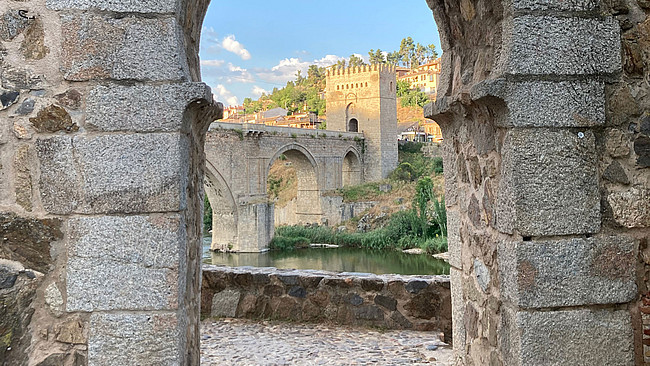
Date and Venue
2-5 December 2026
La Universidad de Castilla-La Mancha, Toledo, Spain
Important Dates:
31 August 2026: Application Deadline
30 September 2026: Notification of Selected Applicants
2 December 2026: Arrival Day in Toledo, Spain
3-4 December 2026: Workshop Days
5 December 2026: Departure Day from Toledo, Spain
Submission Guidelines and Publication
Those interested in presenting papers are invited to submit an abstract (300 words) and a short biography (150 words). Submissions should present a clear research question and a focused case study grounded in its historical context.
Please send your abstract and short biography in a Word file to: hrashwan(at)uaeu.ac.ae by 31 August 2026
The accommodation and travel costs for invited speakers will be covered by AGYA and cooperation partners. Funding is subject to approval.
Selected papers will be considered for publication in a peer-reviewed edited volume or special issue. All submissions will undergo a peer-review process by an interdisciplinary committee.
Full Text of the Call
Members in Charge
- Hany Rashwan, United Arab Emirates University, United Arab Emirates
- Nuha Al-Shaar, American University of Sharjah, United Arab Emirates
- Corinna Assmann, Heidelberg University, Germany
Linda Ammann, Universität Zürich, Switzerland
In collaboration with:
- José Ignacio Sánchez, La Universidad de Castilla-La Mancha, Spain
- Nicola Carpentieri, Università Degli Studi Di Padova, Italy