Aesthetic Pleasure and Eclectic Delight: Arabic Literature and Arts Beyond Canonical Duty
THIS CALL IS CLOSED!
Call for Applications
The summer school project “Arabische Philologien im Blickwechsel / نحودراسات عربية برؤى متعددة ” has a twofold agenda: to facilitate the systematic exchange of perspectives and experiences between scholars based in the West and in the Arab world, and to foster the use of Arabic as an academic language. Addressing young scholars (MA and PhD students, postdocs) in the field of Arabic literary and cultural studies based in European and Arabic-speaking countries, it provides them with the opportunity to present their own research in an international academic context, to discuss current, innovative approaches to Arabic philology, literature and culture, and to practice the respective foreign language (English or Arabic).
Aims and Scope
This year’s summer school will take place in Malta and bring together junior and senior scholars from universities in Europe and the Arab world, working in the field of Arabic literary and cultural studies, both classic and modern, in order to discuss topics, methodologies, and theories related to the aesthetic experience of Arabic literature and arts and the joyful entertainment they provide. Participants will explore critical approaches to the Arabic literary tradition by focusing on artistic experimentation and the pursuit of literary pleasure as vital keys to the understanding of both the historical breadth of Arabic letters and the trajectory of its modern forms. Thus, this year’s summer school deliberately moves beyond the prevailing emphasis in Western academic circles that prioritizes the literary, musical, or visual artifact primarily for its political significance, societal critique, or documentary value.
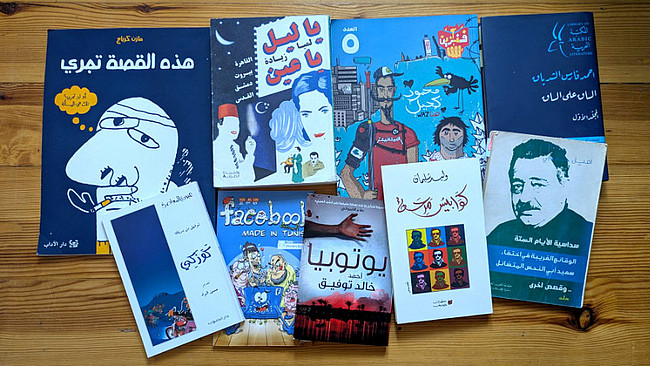
For decades, Arabic literature has been heavily scrutinized for its role in national identity, political resistance, and social reform as well as for the impact of political repression, social constraints, war and exile on artistic expression. While recognizing the importance of such contexts, our approach champions the intrinsic literary quality and the pleasure of the text. This includes both the acknowledged literary canon as well as the rehabilitation of non-canonical genres and forms often excluded from traditional study. Premodern Arabic literature, for instance, is concerned, when celebrating sheer linguistic virtuosity, formal ingenuity, and playful subversion, such as in the maqāmāt or the largely underestimated poetry of the Mamluk era, which in many cases even lacks critical editions. The quest for literary pleasure continues today, although under different auspices: Modern Arabic storytelling is largely energized by a new generation of writers and artists who blend high literary concerns with digital and popular forms in order to foster the reader’s engagement and the accessibility of their work. This extends the field of inquiry to texts not traditionally considered ‘literature’ per se, such as film screenplays, fan fiction, video game narratives, and popular serialized web content. The examples show a need for a deeper discussion on how to approach the Arabic literary and creative artefact independently from its epoch and social function.
Thematic Foci
The following main questions will be tackled during the summer school, and the projects of the participants should – at least partially – relate to one of thems:
- How, when, and why do Arabic literature and arts, ranging from classical linguistic virtuosity and the playful subversion of the maqāmāt to modern digital storytelling, prioritize formal ingenuity and aesthetic experience over their social or political functions? How, when, and why do they do the opposite?
- Are non-canonical genres and underestimated forms of Arabic literature, such as Mamluk-era poetry or contemporary web-based narratives, being rehabilitated? If yes, are they discussed specifically for the ‘pleasure of the text’, both in academia as well as in literary and creative circles?
- How do current intellectual discourses in the Arab world theorize the ‘intrinsic literary quality’ of both classical and modern works, particularly when these texts move beyond themes of national identity or political resistance?
- Has the postmodern lens substantially widened the analytical and thematic scope of literary and arts debates or simply created a new canon of works serving new, yet equally exclusive societal purposes?
Is the academic discourse in Arabic studies evolving to move past ‘orientalist’ frameworks that had prioritized the documentary or traumatic value of Arabic literature related to political, social and environmental crises, to instead engage with the joy and accessibility of the literary artifact?
Full Text of the Call:
Structure and Agenda of the Summer School
The summer school consists of the following schedules:
- Preparatory meeting (July),
- Two individual coaching sessions (September and October)
- Conjoint lectures and presentations (29–31 October)
All sessions are mandatory. Participants will be requested to prepare a short presentation of (parts of) their current research project (20 min) in English or Arabic; they are expected to use the language they are less familiar with in their academic practice.
Professional academic language trainers will offer individual coaching to help the participants improve their presentation in the respective foreign language. Participants are also expected to prepare English and Arabic texts, which will be distributed beforehand, and participate actively in plenary discussions. For this reason, good knowledge of Arabic and English is required.
Contingent upon project approval, travel and accommodation expenses of invited participants will be fully covered by the Arab-German Young Academy of Sciences and Humanities (AGYA).
Submission Process and Timeline
We warmly welcome abstract of research projects from young scholars (MA and PhD students, postdocs) in the field of Arabic literary and cultural studies based in European and Arabic-speaking countries.
- Abstract (3-5 pages)
Should include a passage related to the summer school’s thematic focus, i.e. Arabic Literature and Arts Beyond Canonical Duty.
- Letter of Motivation (short)
- Curriculum Vitae (CV)
- Name, Affiliation and Email Address of Two Academic References
- Abstracts due: 10 July 2026
- Submission: Send all documents in one single pdf file to: arabic-philologies(at)agya.info
Please do not hesitate to contact us for general inquiries.
Candidates will be notified about acceptance by the end of July.
Members in Charge
- Peter Konerding, University of Malta, Malta
- Adam Talib, American University of Cairo, Egypt
In cooperation with
- Noran Amin, Cairo University, Egypt
- Barbara Winckler, Orient-Institut Beirut, Lebanon
- Christian Junge, University of Marburg, Germany
- Bilal Orfali, American University of Beirut, Lebanon
It is part of a research project funded by the Arab-German Young Academy of Sciences and Humanities (AGYA).